

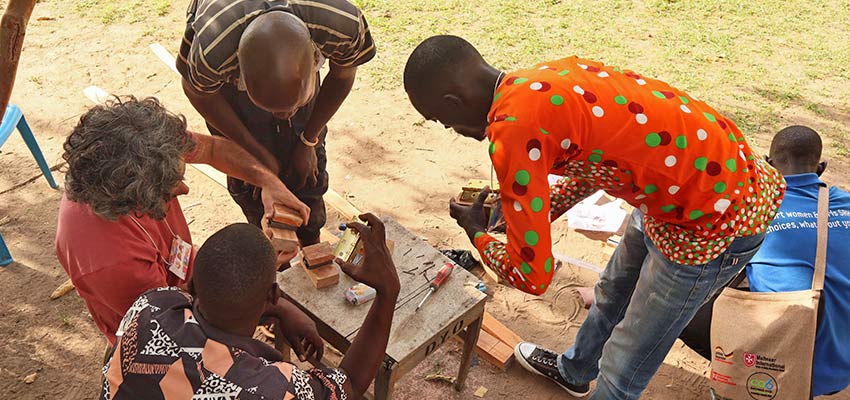
A conference exploring the potential of community engagement and participatory design in the future of humanitarian innovation and creating a community of thought leadership and practice.
Conference: November 12–13, 2026
Project Showcase: November 13, 5:30-7 PM
Optional Workshops: November 14
Massachusetts Institute of Technology
Cambridge, Massachusetts
Conference and meals are free of charge
Attendees
This conference is for researchers, students, practitioners, designers, humanitarian organizations and people who have been displaced by crisis.
At the conference, we will:
-
Explore the potential of participatory design and community engagement in the future of humanitarian innovation.
-
Promote interdisciplinary dialogue on participatory innovation and community engagement in humanitarian settings.
-
Share ideas and develop models for increasing community engagement in the design of disaster preparedness and humanitarian solutions
-
Lay the foundation to create an ongoing community of thought leadership and practice around participatory design and community engagement in humanitarian response and disaster preparedness
-
Showcase ongoing humanitarian innovation programs, as well as faculty research and student projects. (For more on the showcase, see below.)
Apply to Attend!
Space is limited. Fill out this brief application by October 5 to express interest in attending.
Conference background
Humanitarian crises are growing in scale and frequency, while at the same time, funding and other resources for humanitarian aid are shrinking.
Humanitarian innovation strives to help close that gap by designing and developing new and more effective aid products, processes, and programs. The scarcity of resources makes it increasingly important to ensure that these innovations are culturally and contextually appropriate to maximize their effectiveness and efficiency.
Since the World Humanitarian Summit in 2016, there has been growing emphasis on the importance of increasing participation of the affected population in humanitarian solutions. This moment makes finding practical pathways to do so even more urgent. The convergence of several different but related disciplines can catalyze new ways to bring people affected by crisis into the design of innovations in humanitarian response, disaster preparedness, and risk reduction.
This forum seeks to bring together actors from design, humanitarian innovation, urban risk reduction, humanitarian response, community engagement, disaster response and disaster preparedness to explore ways for increasing community participation in innovations in humanitarian and disaster response.
Conference structure
Rather than organizing a conventional academic conference or symposium, this forum aims to be an open platform where researchers, students, practitioners, designers, and humanitarian organizations jointly explore how participatory design can contribute to improved humanitarian response.
The conference will focus on how to deepen community involvement in humanitarian aid, disaster risk reduction, and preparedness by drawing on the experience of the participants and tapping into their ability to implement change on a global scale. By connecting a diverse array of participants, the forum seeks to foster long-term partnerships that generate meaningful impact both locally and globally.
Showcase
The conference showcase is a chance to widen the community and bring other actors in. It will begin with a brief program describing the context and the event, and then have posters and project displays from participants as well as students, faculty, and organizations doing relevant work.
Apply by October 13 to share work related to the conference theme at the showcase! (Attendance at the conference is not necessary for participating in the showcase.)
Conference schedule
- November 12-13: Conference
- November 13, 5:30-7 PM: Showcase
- November 14: Optional workshops
Contact
Questions? For more information, contact the conference organizers here.
