

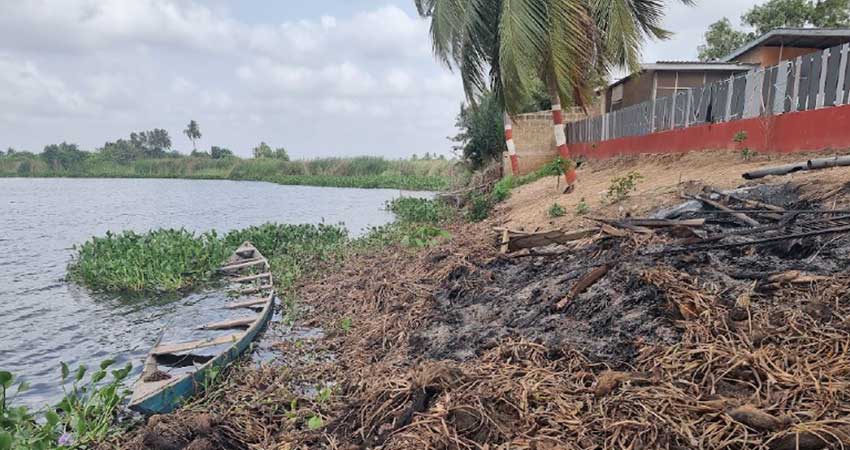
Developing solutions for harvesting and transporting invasive water hyacinths in Lake Volta.
MIT D-Lab Class
D-Lab: Development - Fall 2025
Country
Ghana
Team
- Megan Hung, MIT MBA ’26: Megan is an MBA candidate with a background in consulting and an interest in sustainability
- Kate Zappa, MIT ’27: Kate is a mechanical engineering undergraduate
- Siddhi Patil, Harvard MDE ’26: Siddhi studies how complex systems shape human experience
- Lys Otarola, Harvard MUP ’26: Lys studies urban planning and focuses on international development and economic policy frameworks that drive sustainable outcomes for communities around the world
- Chris Battista, MIT MBA ’26: Chris is a multidisciplinary engineer focused on applying data science to intelligently protect and expand access to essential services globally
- Rodrigo Cavalcanti Alvarez, MIT PhD: Rodrigo is an engineer whose research focuses on thermal sciences and the advancement of low-carbon electricity generation
Community partners
- Kwame Nkrumah University of Science and Technology (KNUST): Johnson Asante
- Volta River Authority
- Volta Invasive Species Transformation Alliance (VISTA)
Problem
The water hyacinth is one of the most invasive species globally. Native to South America, water hyacinths have spread to almost every continent, disrupting ecosystems and negatively impacting communities and economies. In Lake Volta, Ghana, the water hyacinth has affected the hydropower generation plant as well as the fishing economy.
The D-Lab team has been tasked with co-developing solutions to more effectively harvest and transport these invasive plants to reduce their impact on the local ecosystem while providing new livelihood opportunities.
Cultural context
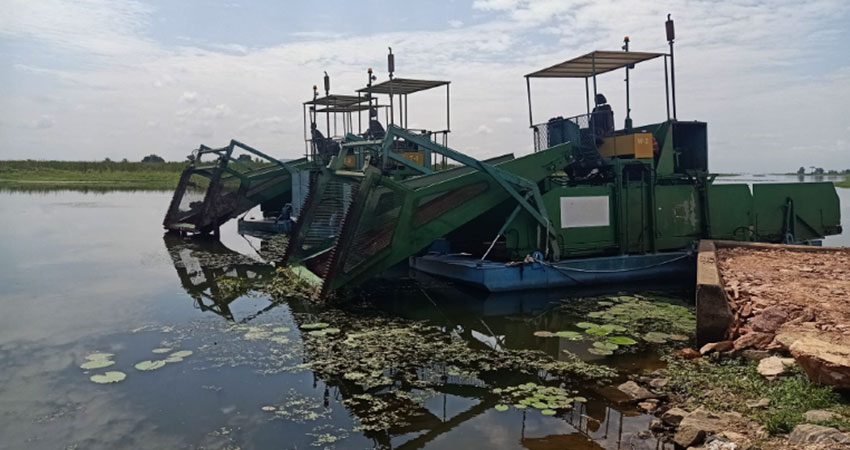
The Lower Lake Volta region is shaped by the cultural traditions of the Ewe and Dangme communities, where fishing and farming anchor social identity. The Volta River is both an economic lifeline and a spiritual symbol of shared history. At 8,502 kilometers, the Volta Reservoir is the world’s largest man-made lake, created by the construction of the Akosombo Dam, Ghana’s most ambitious infrastructure project that serves as a year-round transport and trade corridor, while the Volta River Authority (VRA) sustains thousands of jobs in dam operations and maintenance.
Theory of change
Providing harvesters with simple, robust, locally fabricable tools that reduce physical strain makes weed removal safer, faster, and less labor-dependent. Co-developing these tools with harvesters ensures they fit real lake conditions, can be repaired locally, and strengthen long-term capacity to maintain waterways and stabilize incomes.
Proposed solution
To reduce the labor intensity of harvesting water hyacinths, we are designing intermediate tools with inputs from harvesters. We are also building a quantitative case for the feasibility of livelihood generation via the broader harvesting-to-burn process.
While there are several steps in the harvesting process that could be faster and require fewer people and exertion, we focused on weed removal to shore. Currently, harvesters use machetes to cut weeds, then use breakable sticks to pull the large masses to shore. They desire robust tools operable by fewer harvesters. We investigated simple mechanical tools like winches and pulley systems (e.g., ‘block and tackle’), providing mechanical advantage for pulling weeds to shore. While pulleys will potentially slow the process, gaining more mechanical advantage will reduce the force and number of harvesters necessary to pull the weeds. We also explored designs for a robust metal tool for hooking masses of weeds. Early designs are in wood, with the next iteration in metal. The number of prongs and methods of holding more weeds at once – like spikes – are under consideration.
Next steps
The mechanical solutions proposed are preliminary. Next steps include evolving prototypes and documenting designs that could be refabricated, evaluated, and tested in Ghana. In Ghana, we will participate in the International Development Design Summit (IDDS).
Contact
Libby Hsu, Lecturer; MIT D-Lab Associate Director of Academics