
Developing solutions for smallholder farmers to more effectively use the highly limited water supply to grow more nutritious and calorie-dense crops.
MIT D-Lab Class
D-Lab: Development - Fall 2025
Team
- Alyssa Papantonakis: City Planning, Course 11 (2026). With a background in community development and environmental systems, Alyssa is passionate about developing localized, sustainable solutions to meet residents’ needs.
- Elwin Futrell: Mathematics with Computing and Finance, Course 18C and 15-3 (2028). Elwin is an undergraduate student passionate about technology, business, and engineering practical solutions to complex problems.
- Lars Spinetta: Pure Mathematics + Artificial Intelligence and Decision Making, Course 18 and 6-4 (2028). Lars is an undergraduate student-athlete who loves designing and building low-cost cost effective solutions for localized problems. He especially enjoys working in the field!
- Warren Knowles: Design and Urban Planning, Course 4 + 11 (2028). Warren is a U.S. Navy veteran who served for over 12 years as a submarine nuclear reactor operator, instructor, and supervisor. He is an undergraduate transfer student who attended 5 other universities before attending MIT.
- Varun Maniar: Architecture, Course 4 (2027). Varun is a graduate student in the Department of Architecture whose five years of experience in architectural fabrication shape his research on closing the gap between design intention and construction reality.
- Darya Guettler: Building Technology, Course 4 (2026). Darya is a graduate student studying building technology, specifically focused on decarbonizing building stocks around the world using computational methods.
- Mentor and Trip Leader: Karl Zimmerman (WSP)
Community partners
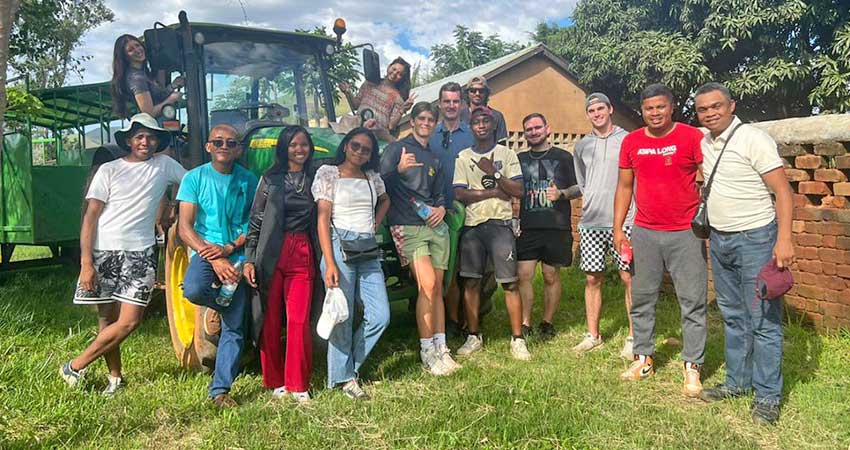
- Tatirano: Tsiry Andriamanampisoa, Kelly Binguira, Manampy Randrianantenaina, Remanjafy Tazavo, Jessie Andriamanankasina, and Harry Chaplin
Country
Madagascar
Project
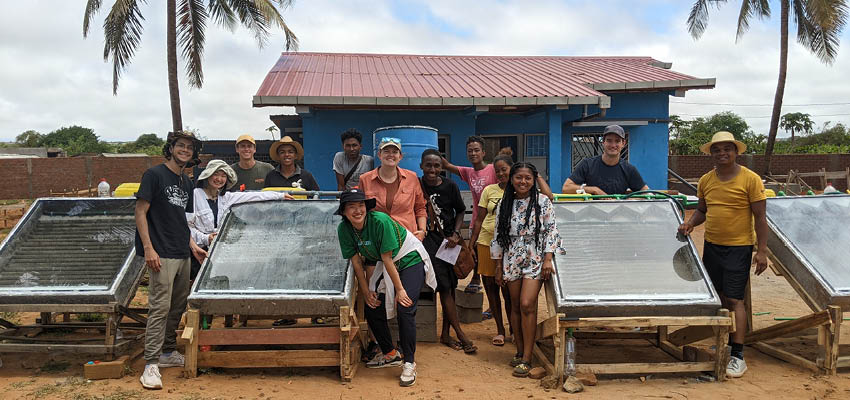
We are working with an NGO in southern Madagascar to develop solutions for smallholder farmers to be able to more effectively use the highly limited water supply to grow more nutritious and calorie-dense crops. To do this, we are developing a closed-loop, covered, shelf-based structure to be able to contain and re-condense evaporated water within the system. The system will use a cloth wicking or drip irrigation approach to adequately water the soil to ensure optimal plant growth, while avoiding overwatering and wasting water.
The problem at hand
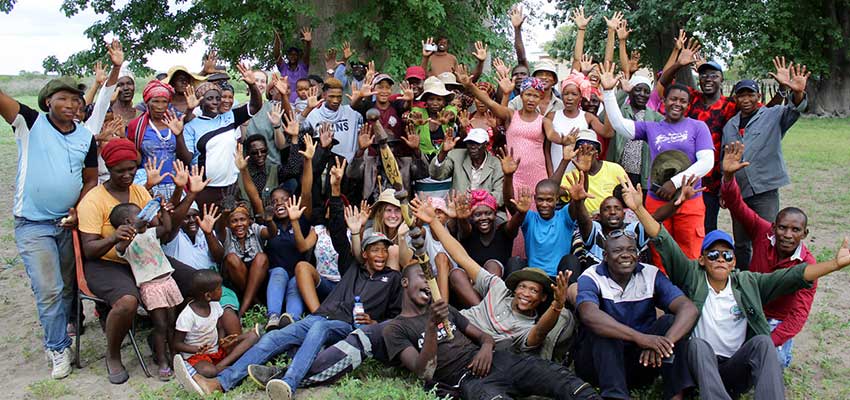
Prolonged periods of drought present a significant challenge to the people of Southern Madagascar, and residents primarily depend on groundwater sources to meet their needs. Due to this, water is both difficult to come by and poor in quality, containing high levels of salt and pathogens. This problem extends to the agricultural sector, limiting the total number and variety of crops that are able to grow. Malnutrition and undernourishment are therefore common, resulting in serious and widespread negative health impacts.
Cultural context
Madagascar has a rich culture, with a blend of Southeast Asian, East African, and Arab influences. The area we are working in, the Androy Region, has a population of approximately 800,000 people, most of which belong to the Tandroy and Karimbola ethnic groups. The majority of those living in the region practice subsistence farming, growing crops like cassava, maize, sweet potatoes, legumes, cowpeas, groundnuts, lentils, millet, sorghum and mangoes. Traditional dishes reflect the country's diversity of cultural influences. Notable dishes in Madagascar include romazava, a stew made of meat and leafy greens, and mofo gasy, a breakfast pancake.
Theory of change
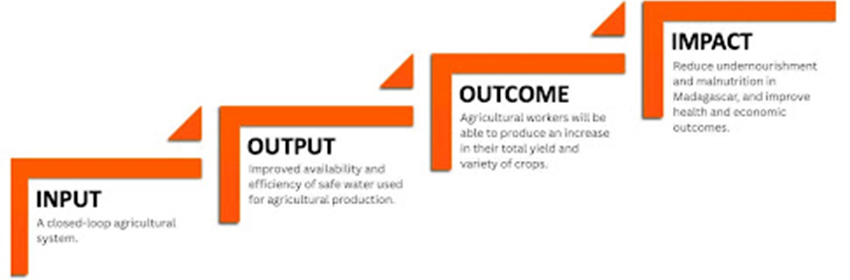
We are developing a closed-loop agricultural system so agricultural workers will have improved access to water, therefore leading to an increase in the total volume and variety of crops produced. This will address undernourishment and malnutrition in the region, therefore leading to improved physical and cognitive development outcomes. This will have widespread impacts, improving the availability and affordability of food and increasing economic potential for agricultural workers.
Stage 1: Design concepts
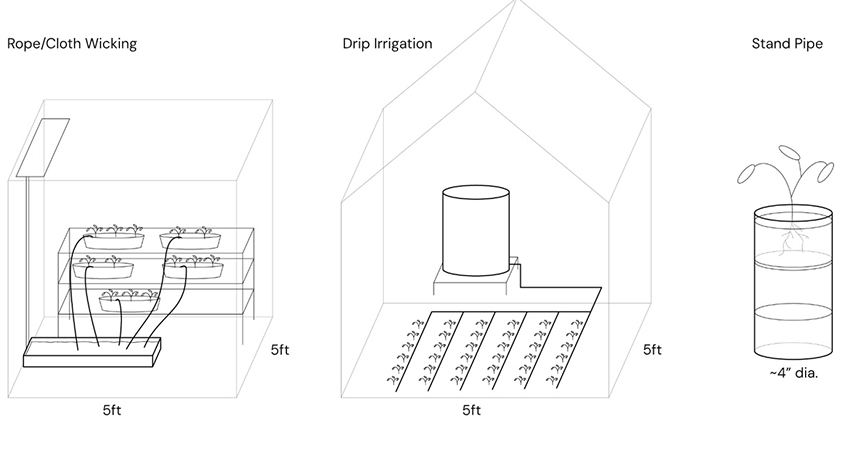
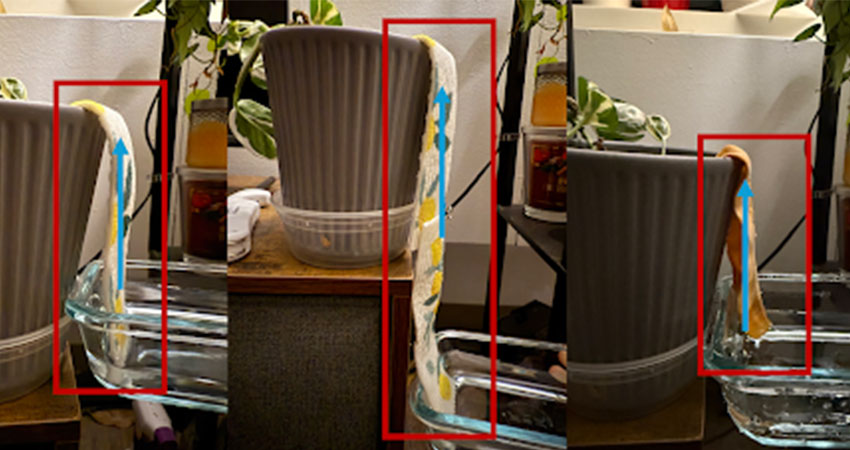
Stage 2: Experiments to test the design concepts to determine the capillary action in different fabrics, lengths, and widths
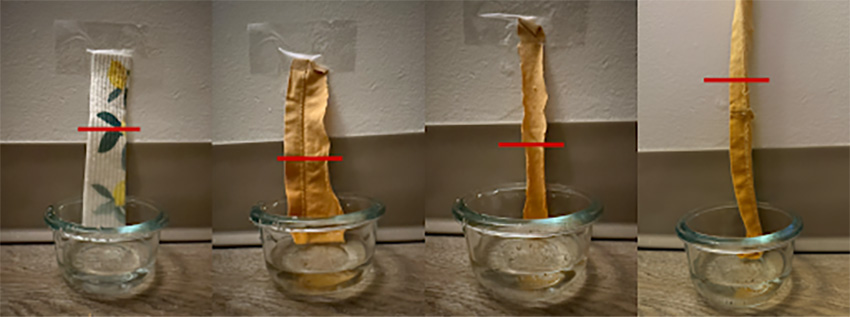
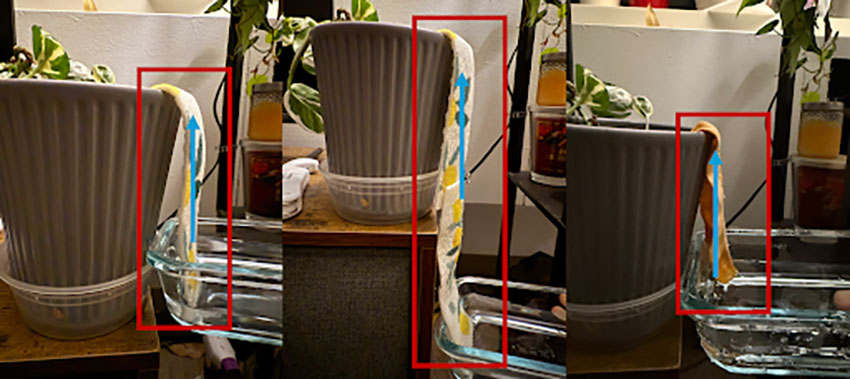
Stage 3: Implementation
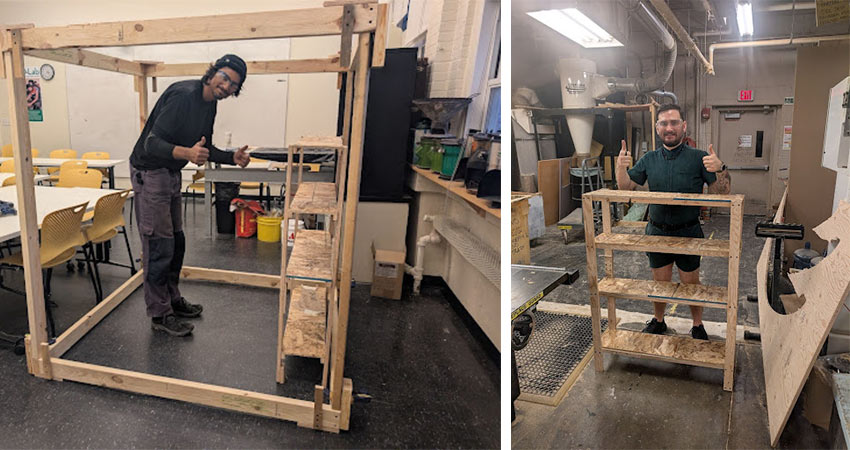
We are currently testing various approaches to the closed-loop agricultural system in order to maximize the availability of water. The first of these utilizes a wicking bed, taking advantage of the process of evaporation to efficiently direct water resources. Within this approach, the use of shelves will also enable us to maximize vertical space in order to increase the total yield of crops. The other takes a drip irrigation approach, delivering water slowly and directly to the root zone of the plants, aiming to reduce evaporation and runoff. Based on the expected conditions of these systems, local nutritional needs, and culturally relevant foods, we have selected two crops to test our approaches: cowpeas (Vigna unguiculata) and sorghum.
Next steps
In January, we will conduct field testing in Madagascar. At this point, we expect the crops to be about halfway through their growth cycle, enabling us to identify ongoing successes and opportunities for improvement within the applied technology. As we develop and refine the technology, we hope to not only increase the availability of common local crops, but increase access to crops that are currently grown elsewhere in the country, introducing more nutritional variety and independence to Southern Madagascar's food system.
Contact
Libby Hsu, Lecturer; MIT D-Lab Associate Director of Academics