

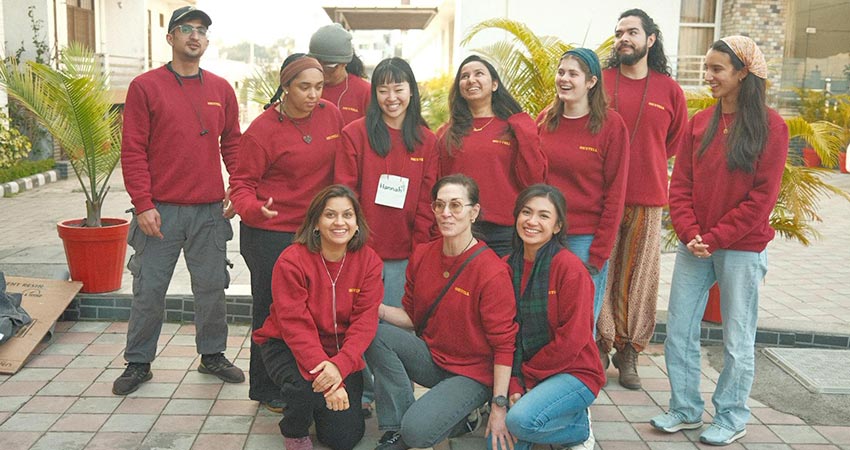
The Land of the Gods faces a waste crisis
Nestled in the southern slopes of the Indian Himalayas lies the state of Uttarakhand, also known as Dev Bhoomi or "Land of the Gods" in Hindi. Uttarakhand is a popular tourist destination for its holy rivers and pilgrimage sites, diverse forests, and proximity to the Himalayas. Unfortunately, the rapid influx of tourism and consumerism has created major issues for the region's waste management system: plastic bottles and chip wrappers line streets, rivers, and hiking trails.
To address these challenges, a group of students from two MIT D-Lab classes, D-Lab: Development and D-Lab: Gender and Development, partnered with Waste Warriors, a Dehradun-based NGO, and Royal Enfield Social Mission. Being the first D-Lab trip of this partnership, we set out to understand the waste management systems of the Himalayan region and fortify connections with local communities.
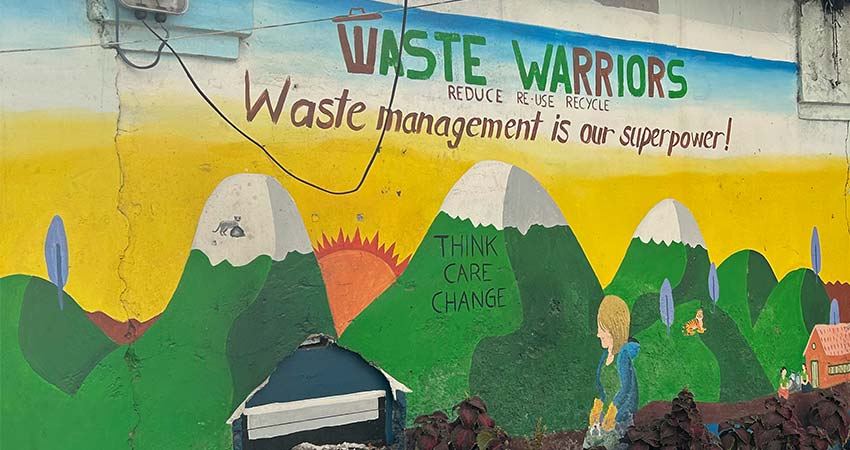
Mapping Dehradun's waste value chain
The first phase of the project consisted of identifying local stakeholders, current processes within Dehradun’s waste management, and ongoing barriers faced by service providers and beneficiaries. We created qualitative research instruments to interview NGO partners, local government officials, residents participating in waste segregation, and waste pickers/segregators. From that data analysis, we gathered a bigger picture for Dehradun’s waste management supply chain as well as anecdotal experiences around barriers to achieving zero-waste in the region.
One of our key partners throughout this semester and on the ground was Waste Warriors, a non-profit organization operating in Uttarakhand and Himachal Pradesh. Their mission is to develop waste management initiatives, ranging from raising awareness about climate change to promoting sustainable practices and dignified livelihoods. Throughout our trip, their support was crucial at many stages of our project. They helped us collect qualitative data through Key Informant Interviews and facilitated the involvement of local residents, students, waste workers, and municipal leaders in identifying possible solutions.
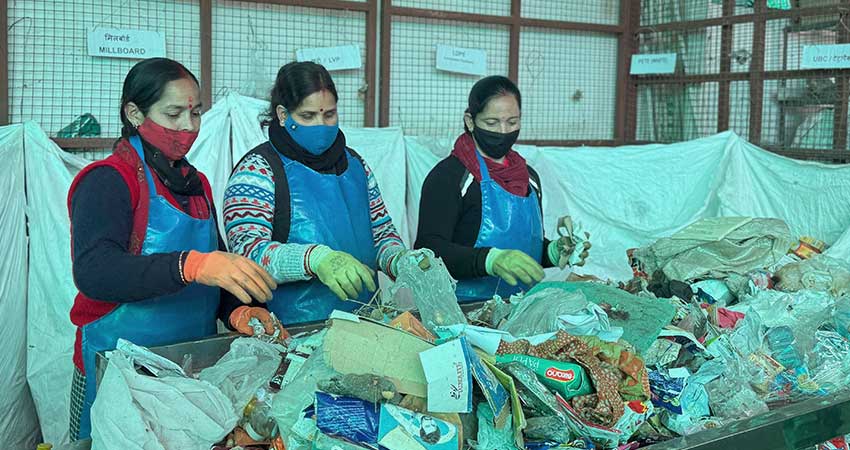
Listening to households, waste workers, and local leaders
Our Key Informant Interviews targeted primary stakeholders: Paryavaran Sakhis (women workers), green workers at waste management sites, local leaders, and rural and urban households. We also visited two Material Recovery Facilities (MRFs) in rural and urban settings.
We found multiple strengths in the current waste system. Rural communities are tight-knit, leading to more households feeling encouraged (or pressured) to segregate their waste. Women workers are a huge asset: their work has led to increased influence within their communities, economic empowerment, and skill-building. Waste Warriors’ awareness campaigns have also been effective in educating households on waste management.
Challenges included regional issues such as monsoons and tourism, social stigma around waste work, lack of government support, and economic challenges within a system that relies on household fees.
We found that areas for expansion included growing the Paryavaran Sakhis model and the dignity of waste work, expanding government funding and policy, and urging more household and community mobilization for change.
The Creative Capacity Building workshop
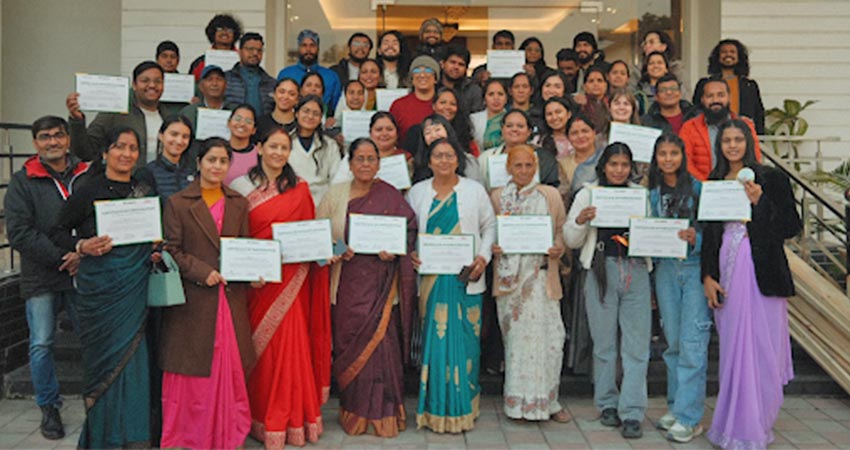
Building on this qualitative research, the second phase of our project was a four-day D-Lab Creative Capacity Building (CCB) workshop in Dehradun. Insights from interviews, observations, and community discussions informed the workshop design, which included Paryavaran Sakhis, local government partners, Waste Warriors staff, and university students.
Over four days, the workshop moved through the CCB design cycle. We started by revisiting findings from the qualitative work, with participants discussing whether those findings reflected their daily experiences. These conversations surfaced shared concerns and clarified which issues to focus on before moving into design and building.
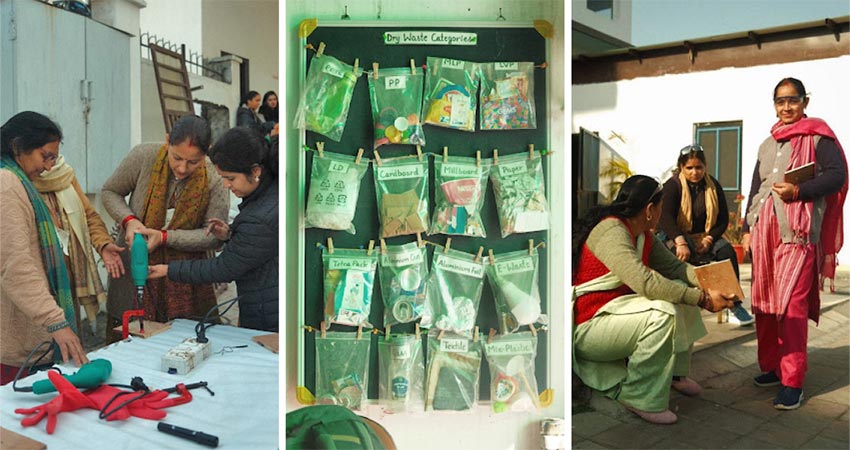
To ground the process further, facilitators shared examples of community-led waste solutions from India and other countries. From there, participants worked through problem-framing activities, identifying challenges they felt were both urgent and workable within their own context.
The workshop also included a Build-It session focused on skill-building, introducing participants to basic tools and fabrication techniques. One activity involved making a PET threader, which is a tool that turns plastic waste into thread for fabric and handicrafts, building familiarity and confidence with tools that participants could apply to future ideas.
Toward the end of the workshop, groups worked through practical questions around timelines, costs, and feasibility. Each team shared their ideas through pitches, creating space for feedback and discussion about what could happen next.
Lessons learned
It was a very meaningful experience to meet with people from the local communities and build relationships through the discussion of waste management and sustainability, and to hear about the shared passion that many of the stakeholders felt compelled to keep their communities clean. Across all different sectors of work and experiences, what emerged throughout all interviews was a shared purpose towards a zero-waste system and environmental preservation.
As it was the first time any of us students had facilitated a CCB workshop, we took away many important reflections and lessons. One of the first things we noticed was the innate creativity of the participants through the nametag-making activity; they crafted beautiful nametags with 3D floral patterns, pipe-cleaner letters, and beautiful calligraphy. This creativity was also reflected in the wide range of problems and solutions that the participants presented.
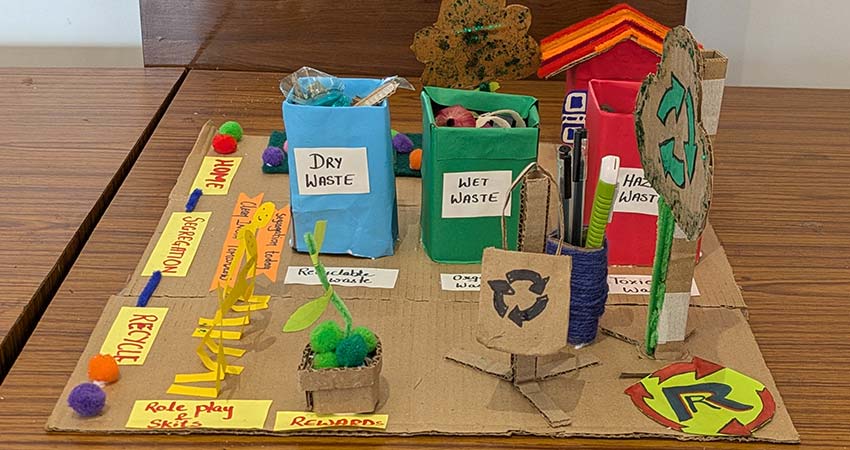
A challenge many of us experienced during the workshop was the importance of power dynamics. Participants came from a wide range of backgrounds, from waste workers to Waste Warriors interns and from municipal leaders to graduate students. In many ways, these groups meshed well together and were able to productively share ideas based on their experiences. However, as facilitators, it was important to take note of when certain voices or perspectives were dominating the conversation.
Another challenge we did not anticipate was the role AI would take in this workshop. As early as the brainstorming stage, AI emerged as a prominent method used by participants for ideation and even decision-making, particularly among younger participants. We found this pattern detrimental to the creative process at the core of CCB, and believe it should be handled carefully in future workshops.
Overall, facilitating the CCB was an eye-opening experience that exposed us to the unique insights community members can contribute to the issues they face and how, when appropriately supported, those insights can form viable solutions. The main observation we took away was how eager participants were to come together and craft solutions towards a common goal. From their grins when wielding drills during the Build-It activity to their passionate pitches on the last day, this community is truly dedicated to building a waste-free future for the Himalayas.
Student team
- Celestina Pint, MIT 2027. Celestina is a junior majoring in Materials Science and Engineering with a minor in Environment and Sustainability.
- Cinta Nurindah Sari, Harvard Medical School 2026. Cinta is a second-year Master of Medical Sciences in Global Health Delivery candidate.
- Dalice Rodriguez Viera, Wellesley College.
- Edgar Rodriguez, Harvard T.H. Chan School of Public Health 2026. Master of Public Health candidate.
- Ethan Suresh, MIT 2027. Ethan is a junior majoring in Physics.
- Hannah, Wellesley College. Hannah is a senior majoring in Media Arts and Sciences, an interdisciplinary studio art and human-computer interaction program.
- Maud Bourgogne, Sciences Po Paris/Wellesley College. Maud is an exchange student at Wellesley College from Sciences Po Paris, majoring in Political Humanities with a minor in Finance. She is also completing a degree in Philosophy at Nanterre Université.
- Ruchee Bhatta, MIT 2026. Ruchee is a senior majoring in Economics.
Mentors
- Dan Sweeney, MIT D-Lab Research Scientist
- Alex Freese (Diversa), Honey Bajaj (D-Lab alum) - Design Team Facilitators
- Libby McDonald, MIT D-Lab Associate Director for Practice and Trip Leader
More information
MIT D-Lab classes: D-Lab: Development and D-Lab: Gender and Development
Contact
Libby McDonald, MiT D-Lab Associate Director for Practice