

Design for relief, recovery, and rebuilding
Are you interested in finding out how participatory innovation can improve the situation of people affected by conflict?
In 2025, there were 117.5 million people forcibly displaced by conflict, violence, or persecution. Available resources are heavily strained, and organizations urgently need innovative solutions to provide basic needs to this population.
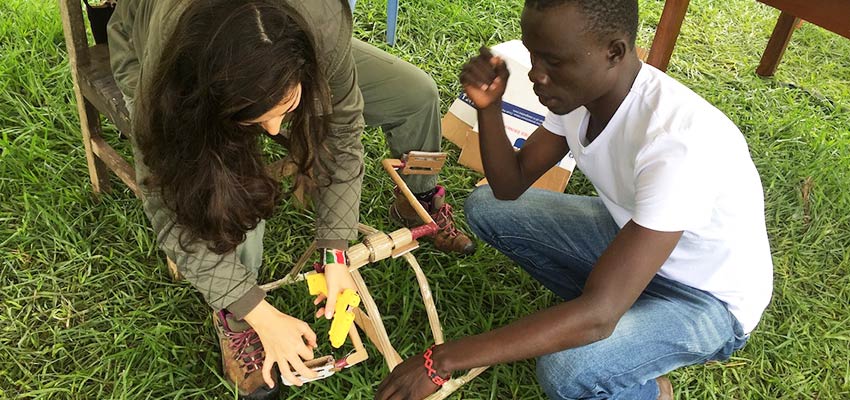
MIT D-Lab takes a capacity-building approach to this challenge, engaging refugees and displaced people in creating solutions to the problems they face and developing opportunities for self-reliance. D-Lab’s Humanitarian Innovation class focuses on building students’ skills to work with conflict-affected populations in the area of humanitarian innovation, providing opportunities to travel (when safety permits) to participate in co-creation activities with refugees.
The class provides a solid grounding in:
- The history of humanitarianism and the overall structure, key challenges, and the current situation in the humanitarian sector
- The evolution of humanitarian innovation and approaches to it that bring the experience, skills, and talent of refugees and displaced people into the innovation process
- D-Lab’s design methodology as a pathway for inclusive humanitarian innovation
- Skill-building in participatory methods for innovation, with a focus on co-creation
To help students understand the range of humanitarian challenges in the world today, the class will focus on situations of protracted displacement and response from conflicts in Sudan, South Sudan, Ukraine, the Democratic Republic of Congo, and Myanmar.
Fall 2026 Projects
This year’s projects will be working with refugees in Northern Kenya, where they are pioneering a new approach to refugee settlement, moving Sudanese and Somali refugees from long-term camps in Kakuma and Dadaab to a more durable settlement in nearby Kalobeyei, effectively creating a new urban center in northern Kenya. The class projects will support the development of income-generating projects to help the refugees as they make this transition.
There will be a three-week trip to Kakuma and Kalobeyei over IAP in January 2027, led by the instructors. Students can apply to go on the trip, during which we will do market assessments and resource mapping and also run design trainings to engage the refugees in creating technologies that will improve their lives and livelihoods. We will be working with partners at the Kenyan Red Cross and the World Food Programme to build the foundation for a long-term project to build local innovation ecosystems in Kalobeyei.
Instructors
The class is taught by D-Lab Founding Director Amy Smith and Humanitarian Innovation Specialist Martha Thompson, who lead the MIT D-Lab Humanitarian Innovation program.
Open to all students
The class is open to both undergraduate and graduate students (those who are taking the graduate version must complete an additional assignment).