
Developing a manual cold press methodology to support aguaje oil extraction and production scaling in rural Peru.
MIT D-Lab class
D-Lab: Design (2.722J / EC.720) - Spring 2026
Team members
- Christina Fradella | 2027 | Course 2 (Mechanical Engineering)a.Bio: 3rd Year Undergraduate studying Mechanical Engineering. She loves to do crafts such as friendship bracelets, origami, and also planning fun events.
- Graciela Leon | 2027 | Course 2 (Mechanical Engineering)a.Bio: 3rd Year Undergrad interested in sustainability in engineering. Has made nitrogen ice cream.
- Ariana Hodlewsky | 2027 | Course 10ENG: Chemical Engineering with a focus in Materials Sciencea.Bio: 3rd Year Undergraduate interested in energy, sustainable materials, and scaling up processes for industry applications in sustainable manners. She loves to hike and play cello.
- Evelyn Tu | 2027 | Economics + French at Wellesley a.Bio: 3rd year Undergraduate interested in real-world microeconomic analysis. Is a member of the Wellesley Equestrian Team.
- Madelyn Popilek | 2027 | Course 2A-PD: Mechanical Engineering and Product Developmental Bio: 3rd Year Undergraduate studying Mechanical Engineering and Product Development. Spends her free time spinning tracks on her very own DJ board.
Partners
- The Flores Brothers: Brothers in Parinari village who currently extract aguaje oil using a hot method.
- Amanatari: Organization aiming to empower local communities in the Amazon —currently supporting the advancement of the Flores brothers’ aguaje production.a.Amanatari Representative:Vicente Avendaño
- Kendra Leith: MIT D-Lab Associate Director for Research serving as a liaison between us, the Flores Brothers, and Amanatari. Her travel experience allowed her to provide important insight into the workings of the Parinari community and its environmental limitations
Project location
Parinari, Peru
Project description
Our goal, as requested by Amanatari and the Flores brothers, was to develop a cold-press method to extract oil from the pulp of the aguaje fruit. The brothers currently use a hot oil extraction method, which involves boiling the contents after the pulp has been extracted from the fruit. Many companies purchase only cold-pressed oil to maximize nutrient content, so a cold-press process is necessary to increase the Flores Brothers’ customer base. With a hydraulic press available, we have created the methodology for loading the pulp in the press and extracting the oil. This method should be adaptable to the press and set up that is available in the location Amanatari and the community intends to press it in.
Cultural context
Parinari, Peru, is a small town located deep in the Amazon. Due to this, access to materials, water, and electricity is limited. However, the production of aguaje oil from the indigenous fruit has created a vital business for the Flores brothers in this community. While the scope was originally limited to producing oil in Parinari, its lack of resources has led to a shift in plans to transport the aguaje to a different site for processing into oil. Amanatari hopes to help the Flores brothers continue to flourish with the harvesting and sourcing of aguaje fruit while also improving the working environment of the current oil producers with a cold oil press.
Proposed solution
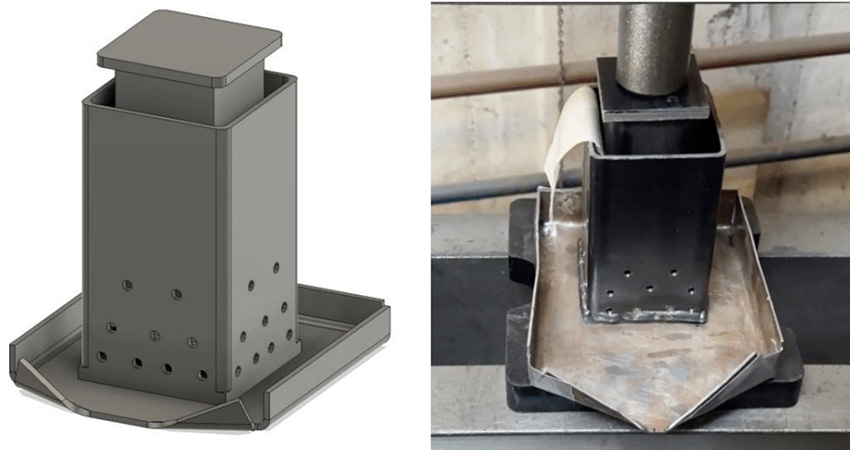
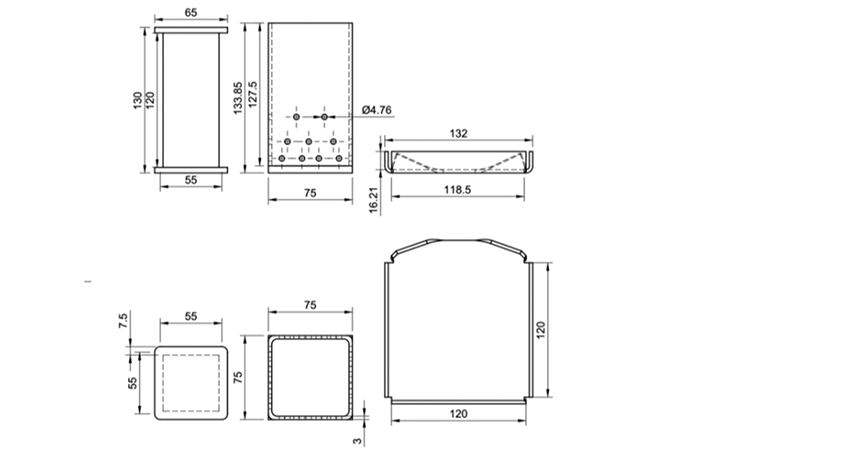
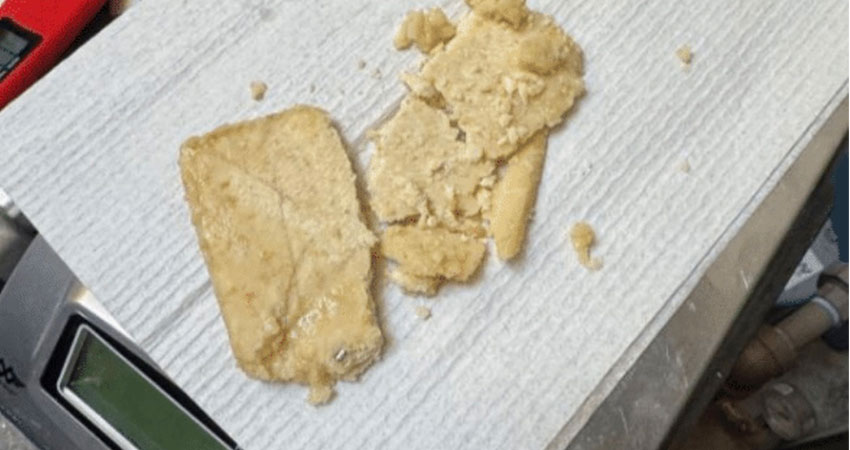
Our proposed solution requires a hydraulic press, a housing to place the fruit in, and a pressure applicator. The housing and pressure applicator work together to hold and press the fruit. The pressure applicator transfers force from the hydraulic press to the fruit, providing the pressure needed to extract oil. The housing has holes in the lower section to allow oil to flow out of the fruit during the process. The cakes of fruit placed within the housing are wrapped in ripstop polypropylene to limit pulp during the initial oil processing. By using a hydraulic press to apply the force, we are limiting the necessary physical labor to produce the oil. We have also discussed the possibility of using a motorized hydraulic press for scale-up, which would significantly reduce physical demands and speed up the pressing process. Physical demands are also limited by the nature of the cold pressing process. The community members working with this press will no longer need to spend up to 24 hours boiling and supervising a vat of oil.
Hand off to partner
Along with any prototyping requested by the community partners, we will provide clear user notes and all past documentation from the semester. These notes will serve as a guideline for operating the press and housing. A scale-up method of the design will also be included in the final instructions. This will allow the community to refer to the design and recreate it at the desired production scale. If this procedure is not adequate, access to our documentation will still allow community partners to consult our notes for additional information and clarification.
Contact
Eliza Squibb, D-Lab: Design Instructor