
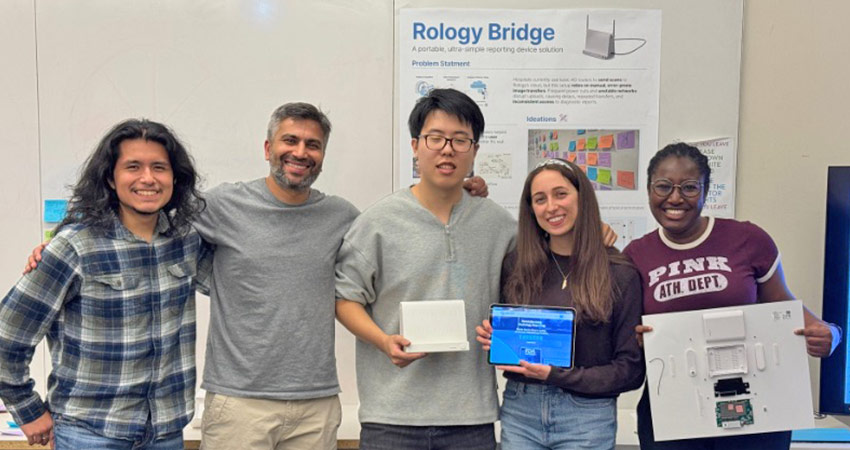
A rugged, user-centered enclosure designed to protect, organize, and support a plug-and-play device that enables rural hospitals to upload diagnostic imaging securely and reliably, even with limited connectivity.
D-Lab class
Design for Scale - 2025
Community partners
- Rology, Mahmoud Barakat, Associate CEO
Countries
Egypt, Kenya, Saudi Arabia
Team
- Akorfa Dagadu — BSE Candidate, MIT, Chemical Biological Engineering, Class of 2026
- Edwin Trejo — BSE Candidate, MIT, Materials Science and Engineering, Class of 2027
- Zeina Barghouti — PhD Candidate, MIT, Mechanical Engineering
- Edward Xu — MDE Candidate, Harvard University
- Vivek Mehta — MBA Student, MIT Sloan School of Management
Problem framing
Across many regions in Africa and the Middle East, hospitals face severe shortages of radiologists and lack the digital infrastructure needed to transmit diagnostic imaging for remote interpretation. Rology, a tele-radiology company, has significantly reduced turnaround times for imaging by connecting hospitals to subspecialized radiologists through an artificial-intelligence-supported cloud platform. However, the platform requires both a device to access the software and a stable internet connection. Many rural hospitals lack these resources, and previous solutions involving tablets, routers, and MiFi devices proved bulky, expensive, difficult to maintain, and unreliable under fluctuating connectivity. This gap created a critical barrier to providing fast and accurate diagnoses.
Cultural and market context
The project is situated within healthcare systems in Egypt, Kenya, and Saudi Arabia, where hospitals operate in varied resource environments. Radiographers often work with aging equipment, inconsistent power, and limited technical support. Market offerings for image-transfer hardware are designed for well-resourced facilities and assume stable broadband, Picture Archiving and Communication Systems (PACS), and server infrastructure. As a result, there is a need for an affordable, rugged, intuitive device that aligns with real workflow conditions in low-resource hospitals.
Competitive analysis
Existing commercial solutions rely heavily on PACS servers, broadband connections, or specialized IT infrastructure. These products are costly, complex to install, and not suited to rural clinical environments. Rology’s vision for the Rology Bridge—a compact, plug-and-play device capable of connecting directly to X-ray, Ultrasound, Computed Tomography (CT), and Magnetic Resonance Imaging (MRI) machines, and transmitting scans over 2G to 5G or satellite—positions it uniquely. The hardware casing must therefore deliver durability and usability at a fraction of the cost and complexity of existing technologies.
Solution and technical details
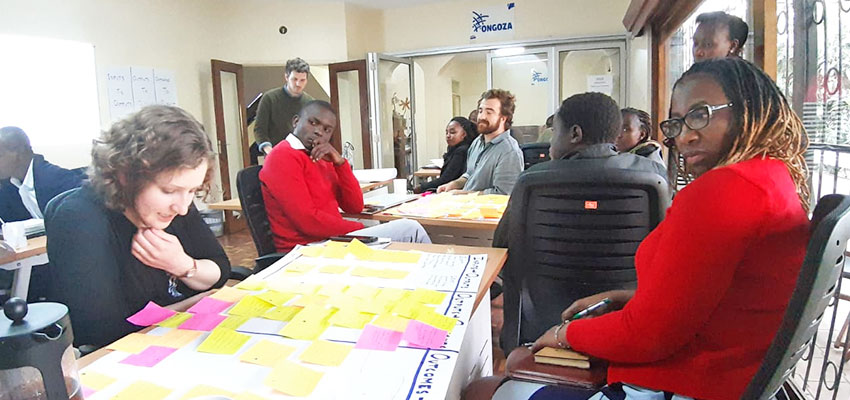
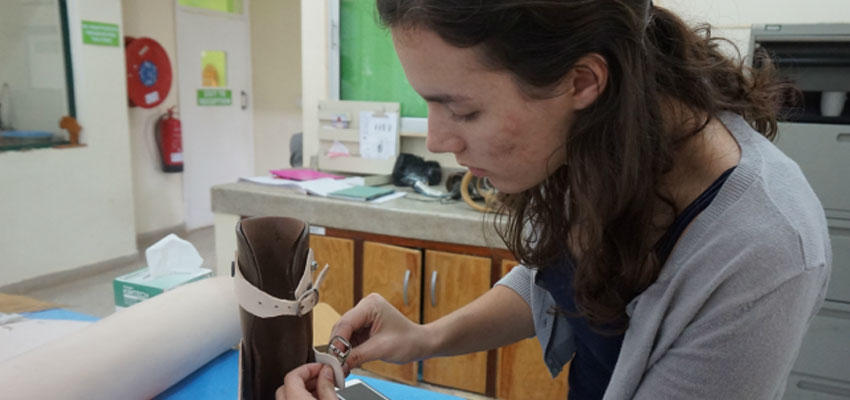
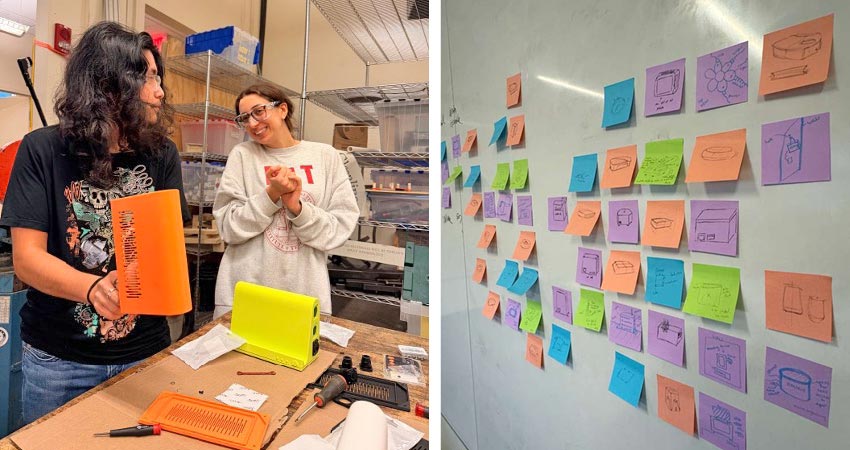
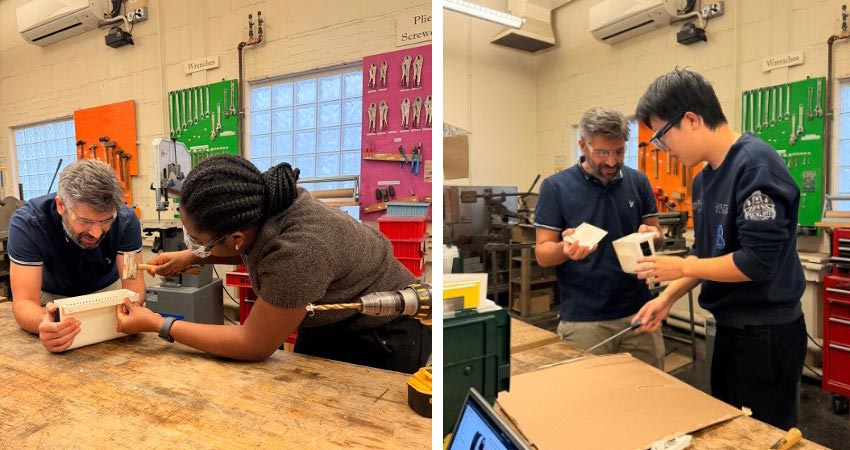
Our team designed the hardware casing for the Rology Bridge. The enclosure protects internal electronics, manages heat, organizes cables, enhances portability, and maintains a medical-grade appearance. Using human-centered design, we engaged radiographers and Rology’s technical support staff throughout the project to understand workflow needs, pain points, and maintenance challenges. Iterative prototyping, CAD modeling, and feedback cycles informed decisions on form factor, ventilation strategies, port placement, and assembly methods. The resulting design balances manufacturability with field durability, ensuring the device can withstand demanding clinical environments while remaining easy to troubleshoot and deploy.
Hand-off and next steps
We delivered detailed design files, prototype documentation, and recommended manufacturing considerations to Rology. Next steps include refining the internal electronics mounting strategy, conducting thermal testing, and moving toward pilot production. The long-term goal for Rology is scaling the Bridge across hospitals in Africa and the Middle East, strengthening diagnostic accessibility and health outcomes.
Contact
Heewon Lee, MIT D-Lab Lecturer and Research Associate
Akorfa Dagadu
Mahmoud Barakat