
A durable, low-cost, locally manufacturable protective housing designed to safeguard Smart-Nuti motorcycle alarm electronics from vibration, impact, dust, moisture, heat, and tampering across diverse motorcycle models in Uganda.
D-Lab class
Design for Scale 2025
Community partner
Smart Nuti, Harrison Asega.
Country
Uganda
Team
- Amanda Chung, Mechanical Engineering, May 2027
- Jonas Sog, Mechanical Engineering
- Maya Kiernan. Masters in Design Engineering, Harvard 2027
- Dalila Valdes, Mechanical Engineering
Project description
Motorcycle theft presents a major economic risk in Uganda. Smart Nuti addresses this risk with a tamper-detecting alarm system that activates when vehicles are disturbed. Early system deployments lacked a reliable protective housing, leaving sensitive electronics exposed to dust, rain, vibration, and physical tampering. Initial solutions relied on plastic wrapping or glued casings, which degraded quickly under operating conditions and offered minimal security.
Motorcycles commonly used in Uganda, including Yamaha, Bajaj/Boxer, TVS/Senke, and Honda models, provide limited and inconsistent mounting locations. Electronics are typically installed beneath the seat near the battery or inside side-panel covers, spaces that vary significantly in geometry and exposure. These constraints necessitated an enclosure that could fit within tight volumes, withstand harsh environmental conditions, and remain adaptable across diverse bike typologies.
Our team reviewed off-the-shelf cases but they were generally too large, poorly matched to Smart-Nuti’s wiring layout, or too expensive at low volumes. We also considered injection molding but while durable we ruled it out due to high tooling costs. Which did not make sense for early batches of roughly 200 units. Based on these factors, 3D printing was selected as the most practical option for customization, low upfront costs, and the ability for local production.
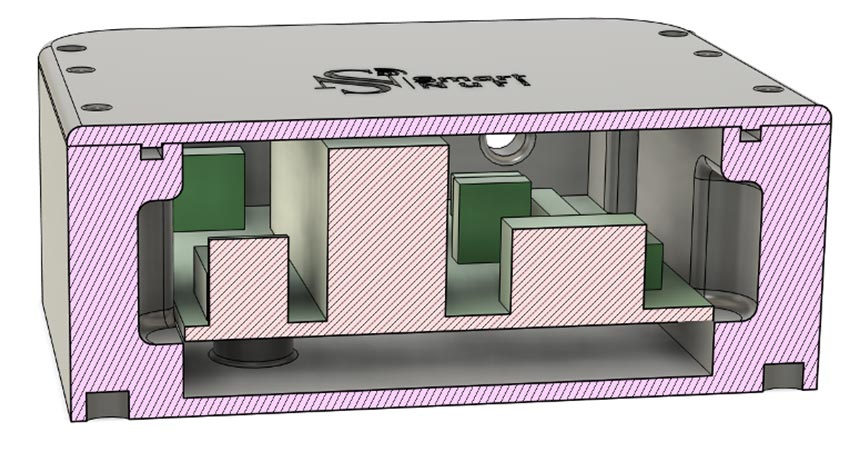
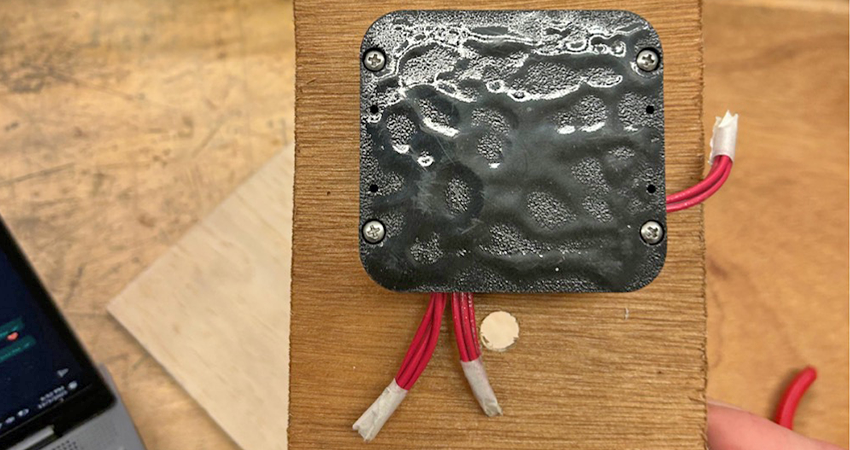
he final product is a two-piece, resin-coated PLA 3D-printed enclosure designed to house both RFID and Bluetooth circuit boards. Internal mounting features hold the PCB securely while allowing future servicing. The case is assembled using tamper-resistant screws that compress the seam to support water resistance and discourage theft.
Two mounting methods were developed to accommodate different motorcycle geometries:
• Direct screw mounting into plastic body panels for maximum stability.
• Steel cable mounting around frame elements where screws are not possible.
This dual-mount system allows installers to adapt to a wide range of bikes.
As a next step a team of D-lab students will bring three 3D printers to Uganda to support local production of an initial batch of 200 housings. This step will also enable continued field testing with riders, refinement of waterproofing methods, and testing of how the housing can be mounted on various bike models.
Contact
Heewon Lee, MIT D-Lab Lecturer and Research Associate