

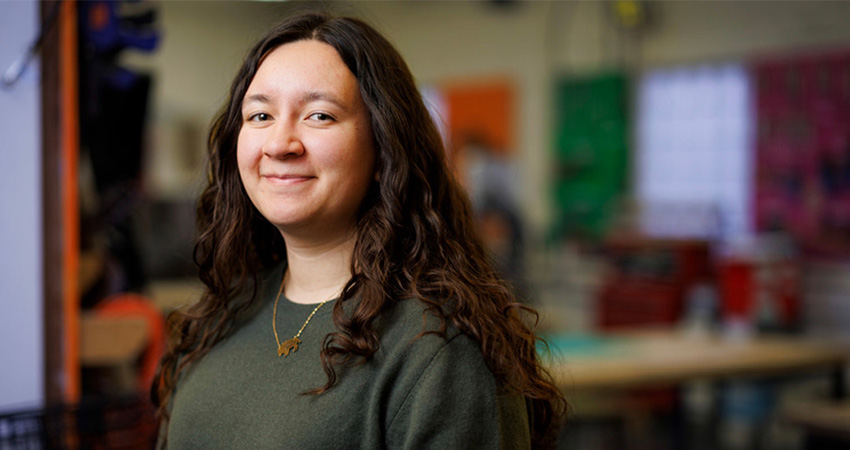
Through research with MIT D-Lab, MIT engineering student Kiyoko “Kik” Hayano worked with Keo Fish Farms to build a model for regenerative water systems.
In many academic circles, innovation is imagined as a lab-to-market pipeline that travels through patent filings, venture rounds, and coastal research hubs. But a growing movement inside U.S. universities is pushing students toward a different frontier: solving real engineering problems alongside rural communities whose challenges directly shape national food security.
A compelling example of this shift can be found in the story of Kiyoko “Kik” Hayano, a second-year mechanical engineering student at MIT, and her work through MIT D-Lab with Keo Fish Farms, a commercial aquaculture operation in the Arkansas Delta.
Hayano’s journey — from a small, windswept town in rural Wyoming to MIT’s campus in Cambridge, Massachusetts, and on to a working Arkansas fish farm — offers a tangible glimpse into how applied engineering, academic partnerships, and on-the-ground innovation can create new models for regenerative agriculture in the United States.
Wyoming childhood and an engineering dream
Hayano grew up in Powell, Wyoming (population ~6,400), a community defined by agriculture, water scarcity, and long distances. Her early interests in gardening with her grandmother and tinkering with irrigation projects through her high school’s agricultural center formed the foundation for a more ambitious goal: studying mechanical engineering at MIT.
That ambition paid off. Shortly after arriving in Cambridge, Hayano connected with MIT D-Lab, a program founded to co-create engineering solutions with communities, rather than for them — especially in regions facing poverty, resource constraints, or climate-related disruptions. For many MIT students, D-Lab is their entry point into field-based development work across Africa, Latin America, and Southeast Asia. Increasingly, however, the program has expanded its domestic mission to include rural areas of the United States experiencing food, water, and energy insecurity.
MIT D-Lab meets the Arkansas Delta
That domestic shift set the stage for a new joint effort. In 2024, Keo Fish Farms — a commercial aquaculture farm near Keo, Arkansas — contacted D-Lab seeking technical collaboration on a growing water quality challenge. The farm had begun to observe elevated iron levels in its groundwater, leading to fish mortality events during peak summer conditions. The problem was both biological and mechanical: Aquaculture species like hybrid striped bass and triploid grass carp require consistent, clean water inputs, and well systems tapping iron-rich geologic layers were compromising fish health, hatchery performance, and long-term viability.
Kendra Leith, MIT D-Lab associate director for research, saw an opportunity. The Delta region represents a collision of three major realities that matter deeply to both public policy and academic research: high-value protein production, aging or inadequate water infrastructure, and generational rural decline.
For Hayano, the chance to work on an important engineering problem with environmental, agricultural, and economic implications was exactly why she chose mechanical engineering in the first place.
Applied engineering in a living laboratory
When Hayano arrived at Keo Fish Farms, the project was structured as a co-creative engineering engagement — D-Lab’s core model. She documented the existing water intake system, analyzed the well depth relative to geological iron strata, and evaluated filtration options including aeration, sedimentation, and emerging biochar-based media.
The collaboration generated three immediate academic values. First, the team reviewed real constraints, a process known as ground truthing. Constraints in this situation included iron levels that shift seasonally, capital budgets that do not assume infinite funding, and labor cycles tied to harvest seasons. The team then scoped out the technology that might be used to mitigate problem areas. Iron-reduction solutions ranged from drilling deeper wells to incorporating biochar and other regenerative filtration mediums capable of binding contaminants while improving soil and plant health elsewhere on the farm. Finally, they reviewed policy relevance: Water quality in aquaculture sits at the intersection of U.S. Department of Agriculture (USDA) conservation, Environmental Protection Agency (EPA) water standards, climate-driven aquifer variability, and domestic protein security — issues central to U.S. food systems.
Leith notes that “the most transformative experiences happen when students and communities learn from one another.” The Keo project, she adds, is an example of how domestic food production systems can act as test beds for innovation that previously would have been deployed exclusively abroad.
Regenerative agriculture as a national opportunity
While Keo Fish Farms played a supporting role in the narrative, the project highlighted a broader challenge and opportunity: Can U.S. aquaculture transition toward regenerative agriculture principles?
Regenerative agriculture — long associated with row crops, grazing systems, and soil carbon — rarely includes aquaculture in the national conversation. Yet aquaculture sits at the nexus of water chemistry, nutrient cycling, renewable energy integration, biochar and filtration research, protein production, and greenhouse gas mitigation.
Hayano’s work helped illuminate that regenerative aquaculture will likely depend on regenerative water systems, where filtration, biochar, solar energy, and nutrient reuse form a closed-loop infrastructure, rather than a linear extract–use–discharge model.
D-Lab’s domestic projects increasingly intersect with this space, creating pathways for MIT students and faculty to collaborate with USDA, the U.S. Department of Energy (DoE), and National Science Foundation (NSF) priorities around rural innovation, renewable energy, and water systems engineering.
The role of industry partners: less spotlight, more signal
Keo Fish Farms’ involvement served as a platform — not a spotlight — for the engineering and policy implications emerging from the project. The farm provided three critical ingredients academic institutions often lack: a real commercial engineering problem with economic consequences, a living laboratory for field research and prototyping, and a pathway for future regenerative adoption at scale.
The farm’s leadership has stated that its long-term goal is to become a first-in-class demonstration site for regenerative aquaculture in the United States, combining advanced iron and sediment filtration, biochar production from local rice hull waste streams, renewable solar energy systems, water recycling and nutrient recovery, reduced chemical inputs, and habitat and biodiversity considerations.
To be sure, the D-Lab collaboration did not solve that entire puzzle, but it created the blueprint for a pathway, showing how academic partnerships can accelerate regenerative transitions in rural U.S. agriculture and aquaculture systems.
Lessons for universities and policymakers
For universities, the Keo–MIT D-Lab partnership offers a replicable model for experiential learning for STEM students, field-based regenerative research, technology validation in live agricultural systems, and cross-disciplinary collaboration. And for federal and state policymakers, it illustrates how rural communities can serve as innovation sites, why water infrastructure modernization matters to food security, how regenerative agriculture can expand beyond soil and grazing, and why public-private-academic partnerships deserve new funding pathways.
All of this aligns with emerging priorities at the USDA, DoE, NSF, and EPA around sustainability, climate resilience, and domestic protein systems.
For Hayano, the experience reinforced that engineering careers can be rooted not only in Silicon Valley labs or aerospace firms, but also in overlooked rural systems that feed the country.
“I’m really grateful for the experience,” she reflected after the project. “It opened my eyes to how engineering can support sustainable food systems and rural communities.”
The sentiment echoes a broader trend among students seeking careers at the intersection of technology, environment, and public good. Whether Hayano returns to the Arkansas Delta or not, her path captures something deeply relevant to America’s innovation story: talent emerging from rural places, innovating at world-class institutions, and returning engineering capacity back into the country’s agricultural heartland.
It is, in many ways, a modern form of the American dream — one grounded not in abstraction, but in water, food, soil, and the systems that will define our next century.
More information
Contact
Kendra Leith, MIT D-Lab Associate Director for Research