

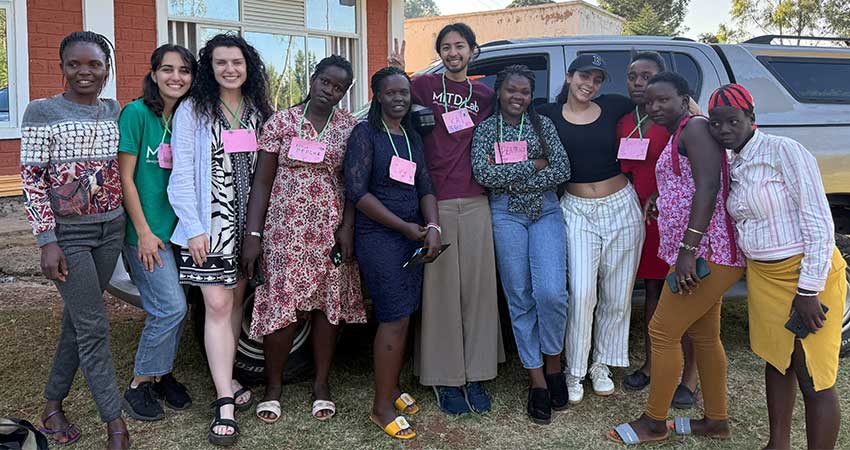
When we arrived near Homa Bay, Oyugis, Kenya in January 2026 to facilitate a Creative Capacity Building for Business (CCB-B) workshop at Society Empowerment Project, we arrived prepared. We had a detailed manual, a clear agenda, and a set of metrics we planned to track. But as anyone who has worked in community-based settings knows, the most meaningful parts of a workshop rarely show up on a dashboard.
CCB-B is a methodology designed by MIT D-Lab to help community members develop businesses that increase family income and long-term resilience. Unlike traditional business school models, CCB-B is intentionally hands-on. It operates on a simple idea: if someone can design and build a physical tool, they can apply that same process, confidence, and problem-solving mindset to building a business.
We, a group of students from the D-Lab: Development and Gender class, were working with a group of teen mothers. These were young women who are often spoken about in terms of what they lack or what they are up against. But from the start, it was clear to us that they carried a tremendous amount of capability. Our goal was not to prescribe business ideas or push external solutions. Instead, we wanted to work alongside them to analyze their local food systems, understand what kinds of agribusinesses made sense in their specific context, and support them in designing ventures grounded in their culture, daily realities, and way of life. The intention was not short-term inspiration, but real, sustainable pathways toward financial independence.
The spark: “I Did It Perfectly”
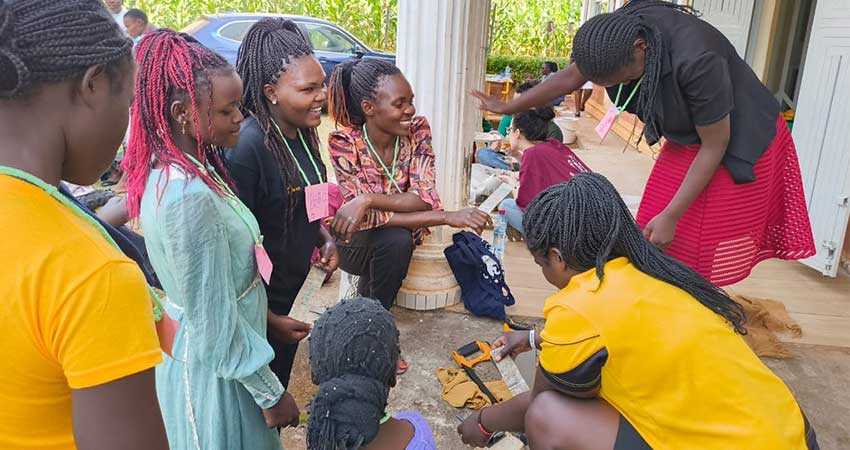
The tone for the entire week was set on Day One during the Build-It session. The participants built hand-held maize shellers from scratch using sheet metal, nails, and hammers.
On the surface, the maize sheller is a simple tool. But in this setting, it represented something much larger. Tasks that normally take hours of repetitive, physically demanding labor could now be done in minutes. The sheller reduced strain, saved time and effort, and produced cleaner, higher-quality maize. Given that maize is a staple crop in Oyugis and widely accessible, the tool immediately felt relevant and useful.
One moment in particular stayed with us. After finishing her sheller, one young woman held it up, smiling widely, and said, “I did it perfectly.” She didn’t say the tool worked. She said she did it perfectly. That distinction mattered. You could see the shift happen in real time. That moment marked the transition from hesitation to ownership, from uncertainty to confidence. The sheller was not just a productivity tool. It broke down an internal barrier many people carry quietly: the belief that they are not capable.
Data meets reality: making the market real
As we moved into the CCB-B cycle, we began with a Market and Food Systems Analysis. We came prepared with data on what foods were being purchased by anchor institutions such as schools, hospitals, and restaurants. We reviewed information on average prices, demand, and county-level sales volumes.
What we did not bring, and could not have brought, was the context the participants added. They were eager to engage with the data and immediately began explaining the story behind the numbers. When we looked at regions with lower reported sales volumes, the young women quickly explained why. In many of those areas, most families grow their own food, so the idea of a centralized market operates very differently. What initially looked like low demand was actually a reflection of self-sufficiency.
Their ability to layer lived experience onto abstract data transformed the discussion. It stopped being about numbers on a page and became a real conversation about opportunity, constraints, and strategy. The participants were not just learning how to analyze markets. They were teaching us how those markets actually function.
The heart of the workshop: showing up fully
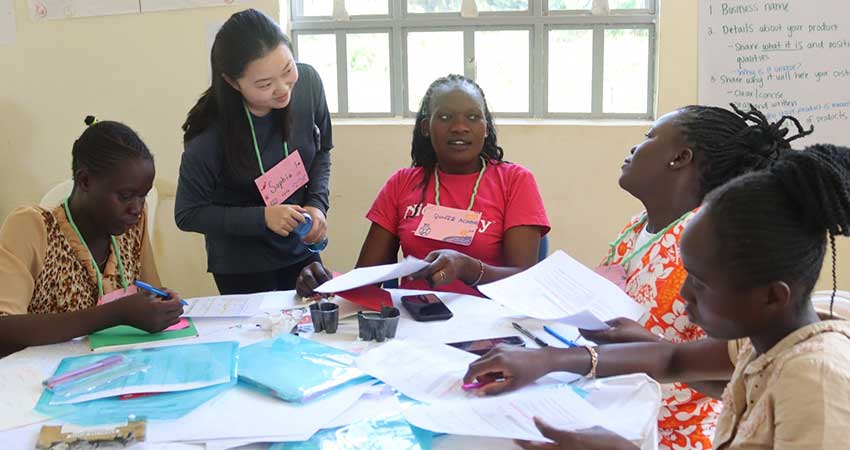
On Days Two and Three, we ran a series of exercises focused on helping participants understand who their customers could be, how to identify them, and how value moves through a supply chain. We worked through different agribusiness paths they were interested in pursuing locally, including fish farming, poultry, growing produce such as maize, cereals, and beans, and purchasing food to sell it cooked. The sessions culminated in a pitch competition where each group shared their business idea.
While the technical progress was meaningful, what stood out most was the level of engagement. Many of these young women had already been mothers for years. Some were caring for their second or third child, despite being very young. Their days outside the workshop were demanding. The workshop days themselves were long, often close to 12 hours.
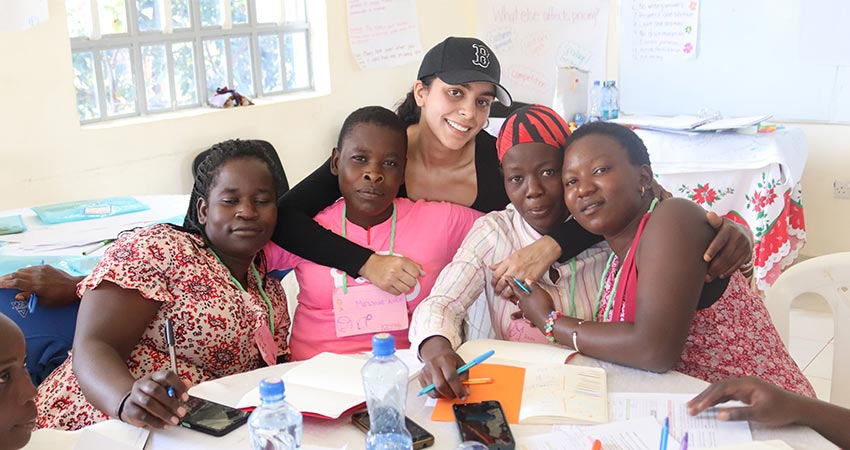
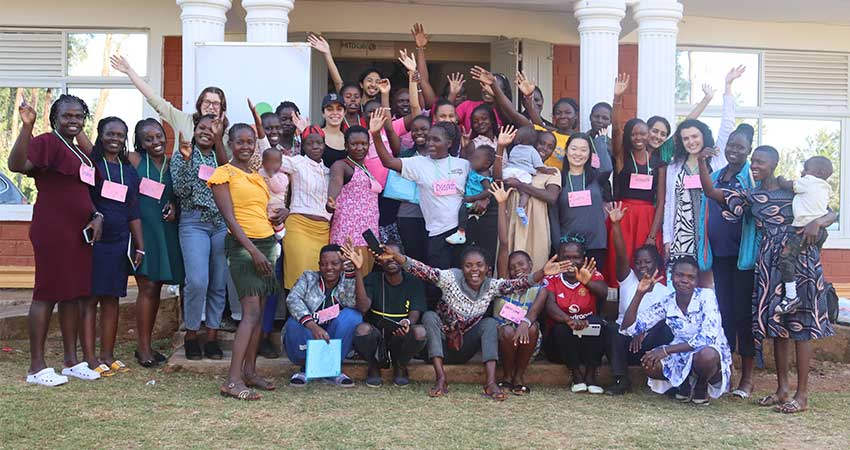
Still, they remained present, attentive, and deeply focused. This did not feel like a training they were attending because they had to. It felt like something they were choosing. Every day, they arrived smiling, laughing, and ready to participate. They asked thoughtful questions, challenged assumptions, and supported one another. The room became a genuine co-creation space where learning felt collective and purposeful.
The transformation: from quiet circles to the governor’s podium
The week ended with a Community Showcase, and the change from the beginning of the week was striking. On Monday morning, many participants spoke so quietly during Morning Circle that they were barely audible. By Friday, they stood confidently in front of community members.
Each group presented a clear business plan outlining budgeting, value creation, milestones, and next steps. They demonstrated not only what they had learned, but how seriously they had taken the process.
The showcase included local community leaders and the regional governor. Two of the teen mothers volunteered to speak to the full audience. They did not simply describe products or ideas. They spoke about what they wanted to build and why it mattered for their families and community.
One of the most rewarding moments came afterward. We watched participants and community members exchange phone numbers and talk through possibilities. The showcase turned into a space for connection and future customers. The girls left with more than a framework or a manual. They left having experienced what it feels like to identify a problem, build a solution, and be taken seriously by their community.
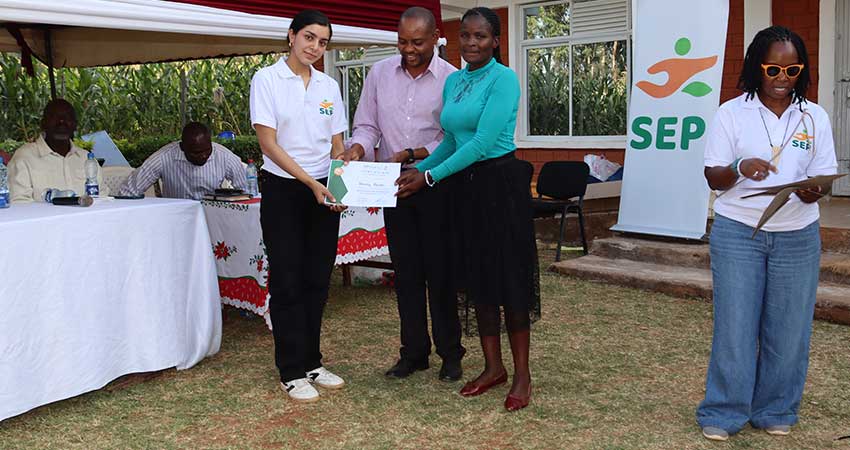
As we left the ceremony, we felt a deep sense of gratitude. We had been welcomed into a community and had the chance to contribute to something meaningful, viable, and rooted in reality. Just as important, we left with relationships that will last well beyond the workshop. What we built together in Homa Bay was not just a set of businesses. It was confidence, dignity, and belief in what is possible.
More information
MIT D-Lab class: D-Lab: Gender and Development
Contact
Sally Haslanger, Co-Instructor D-Lab: Gender and Develpment