

Back to the origins
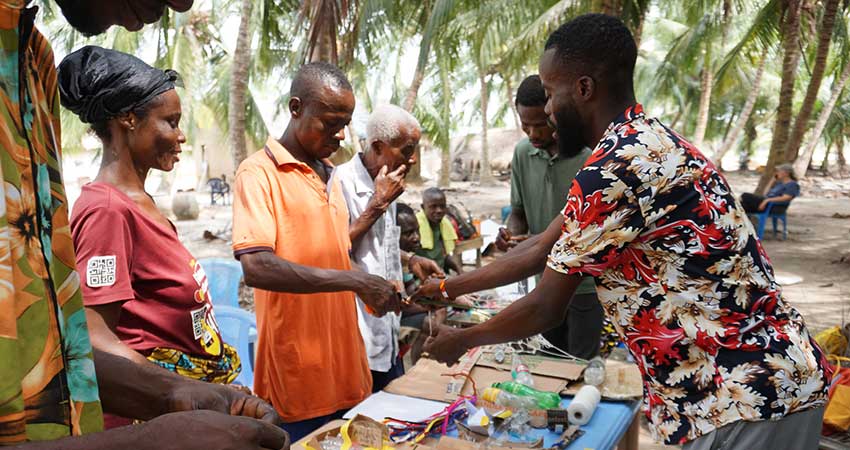
Fifteen years after the first International Development Design Summit (IDDS) held in Ghana—the first IDDS outside the United States—we returned to its origins in early 2026. After a semester of preparation studying current and historical theories of international development, building working relationships with local partner institutions, and learning about the urgent challenges posed by invasive aquatic weeds in Ghana’s Lower Volta River, a group of five students from the D-Lab: Development class and two students from the Applications of Energy in Global Development class participated in a field trip to take part in the IDDS Volta Invasive Species Transformation Alliance (VISTA) under the supervision of MIT D-Lab Research Scientist Dan Sweeney. The objective was to develop technologies that address the impacts of invasive aquatic weeds in the Lake Volta region and to improve the lives and livelihoods of local community members. What followed was an intense, collaborative, and deeply formative experience in participatory design.
Beginning in Akosombo, we were joined by participants and organizers from 13 countries, representing a wide range of disciplines, experiences, and perspectives. After being introduced to the local culture and history of the region, we were divided into teams that worked with the communities of Kua, Kpong, and Aflive, each focusing on locally identified challenges.
Kua – Gari processing
Gari is a widely consumed Ghanaian food made from processed cassava. After harvest, cassava roots are peeled, grated, and pressed to remove excess water. The resulting dough is then sieved until it takes on the appearance of a fine flour and is finally dry-roasted in a large pan until crisp.
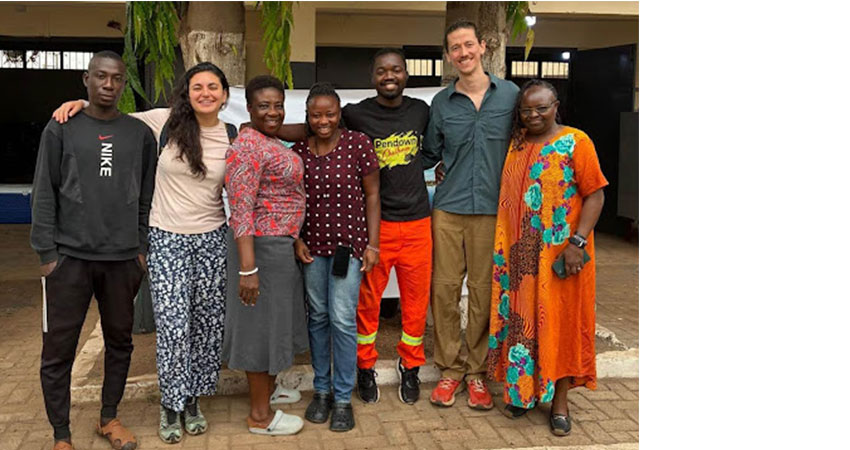
After learning about, observing, and attempting the different stages of gari production ourselves, we came to understand that traditional gari roasting is particularly harmful. The process exposes workers to extreme heat and dense smoke, posing serious health risks while also contributing to environmental pollution. In response, the Gari Team (pictured below) chose to focus on this challenge by designing a workstation that enables gari to be roasted in a healthier environment through the use of an electric cooktop that is both safe and environmentally friendly.
The proposed solution adapts an electric cooktop to replace firewood, eliminating smoke and significantly reducing heat exposure. Importantly, the traditional gari roasting pan is retained to ensure compatibility with local practices and preferences, while being integrated into a more ergonomic and efficient workstation design.
Kua - Aquatic weed briquette press
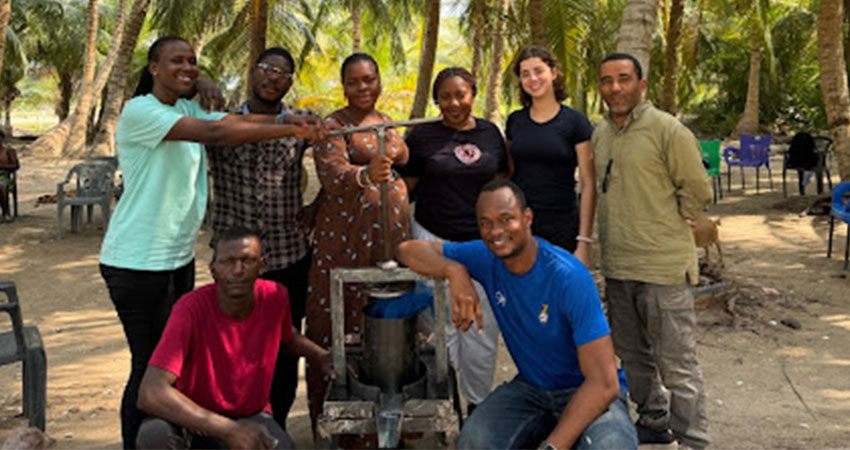
Invasive aquatic weeds are greatly harming communities along the Volta River and its tributaries by restricting fishing, transportation, and access to water supply. The aquatic weed briquette team aimed to add value to aquatic weeds after removal by transforming dried weeds into briquettes for an affordable and sustainable cooking fuel alternative.
When gathering information in Kua, we learned that the community was extremely concerned about the rapid growth of the weeds, which almost resembled a field on the river. The community was excited at the idea of turning dried weeds into briquettes that could be burned for cooking fuel, as they are spending large portions of their income buying charcoal, or hours of manual labor gathering firewood to cook. At a Kua community meeting, we asked people to vote on whether they would prefer carbonized or decarbonized (charred) weed briquettes, and the result was overwhelmingly decarbonized–guiding the rest of our project.
We then went to Suame Magazine in Kumasi to develop our prototype. We settled on a hydraulic press, prioritizing a manual and easy to use device as a first prototype. We made several design iterations and quickly trouble-shooted flaws in our device until it was in consistent working condition and ready to be presented to the community again for feedback. Considering this feedback as we move forward, there is a team at D-Lab and in Ghana continuing to improve the press to produce higher throughput and better meet the needs of the community.

Kpong - Coconut Kernel processing
The Coconut Kernel Processing team worked in the Lower Volta region of Ghana, where coconut oil is widely used for cooking and household needs and plays an important role in many local communities. In Kpong, the team learned that coconut oil is traditionally extracted through a labor-intensive process in which coconuts are cracked, the kernel is grated, mixed with water, squeezed by hand to extract coconut milk, and then boiled for long periods until the oil separates.
Through observing this process and speaking with local processors, the team quickly recognized how physically demanding and time-consuming it is. The repeated manual squeezing and long hours spent boiling the mixture make production exhausting and limit how much oil can be produced in a single day.
In response to these challenges, the Coconut Kernel Processing team set out to design a machine that could make coconut oil extraction more efficient while remaining appropriate for local use. The goal was to reduce the multiple stressful steps involved in traditional processing by introducing a mechanical system that applies controlled compression to extract oil more effectively. By reducing physical effort and processing time, the proposed solution aimed to improve productivity, increase income opportunities, and support entrepreneurial aspirations within coconut-producing communities.
The project began in Kpong, where user insights were gathered and the initial concept for the first prototype was developed. After completing this prototype in Suame, the team relocated to Aflive, an island community with a greater abundance of coconuts and a higher concentration of coconut processors. Working in Aflive allowed the team to gather additional community feedback and continue iterating on the design while engaging more closely with local producers and gaining a deeper understanding of their daily workflows, challenges, and needs.
Aflive - Aquatic weed harvesting
Invasive aquatic weeds pose a serious issue to local communities along the Volta River. In addition to creating blockages which may disrupt hydropower generation, the weeds also impede waterways, harm the local fishing economy, prevent access to fresh water, and proliferate diseases like schistosomiasis. The Volta River Authority has been working to manage the aquatic weeds; however, existing solutions are highly labor-intensive or extremely costly, making them inaccessible to smaller communities.
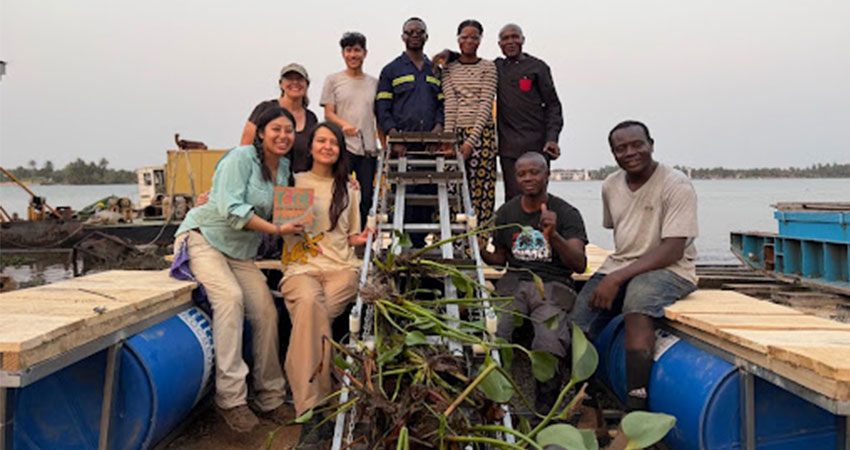
In-depth conversations with the community unearthed a variety of needs, including safety, portability, and minimal exertion. With these priorities in mind and design inspiration from the community, the Aflive team designed a hand-powered conveyor belt and accompanying floating platform. The revolving belt of tines would scoop floating aquatic weeds from the water and deposit them on the deck of the platform with minimal human effort.
Aflive - Coconut fiber extracting
The coconut fiber team focused on extracting usable fibers from coconut husks, a resource that is abundant in the community but largely discarded after the coconuts are sold in local markets. While coconuts themselves are widely used and sold, the fibrous husks are typically thrown away despite their potential to be transformed into durable household products such as doormats, ropes, brushes, and upholstery, as well as valuable horticultural materials like potting mix and soil amendments that improve water retention and aeration.
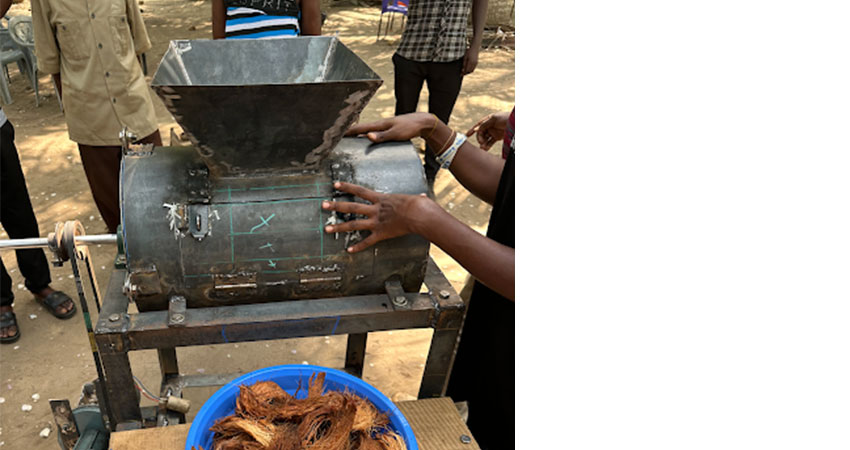
We spoke directly with community members to understand how they currently use coconuts and to gauge their interest in collaborating on a solution that would allow them to process and sell the fibers. There was strong excitement around the idea, especially for a motor-powered machine that could make fiber extraction more efficient and scalable. In Kumasi, our team ideated and developed a concept for a rotating beating mechanism: coconut husks would enter through a funnel into a cylindrical chamber containing a shaft with blades designed not to cut but to beat the husks apart into usable fibers.
When we presented the concept back to the community, they were enthusiastic about the possibilities. Because coconut fiber has not traditionally been utilized in Aflive, the project felt especially exciting. There is a huge opportunity to turn what is currently waste into a new source of income and locally produced materials with many practical applications.
Conclusion
IDDS was truly an immersive experience that enabled us to not only deeply explore the co-design process but also allowed us to meet and connect with a group of highly driven and passionate individuals. We left Ghana with many new learnings and, more importantly, with many new friendships!
Team
- Kate Zappa (‘27): Kate is a mechanical engineering student at MIT.
- Laura Morris (‘27): Laura is a mechanical engineering student at MIT.
- Maria Jose Guerrero Gallegos (‘27): Maria Jose is an MIT undergraduate double majoring in Mechanical Engineering and Architecture.
- Lys Otarola (MUP ‘26, Harvard): Lys is a Master in Urban Planning at Harvard who focuses on international development and economic policy frameworks that drive sustainable outcomes for communities around the world.
- Megan Hung (MBA ‘26): Megan is an MBA candidate with a background in consulting and an interest in sustainability and start-ups.
- Rodrigo Cavalcanti Alvarez (Ph.D. student): Rodrigo is an engineer whose research focuses on thermal sciences and the advancement of low-carbon electricity generation.
- Siddhi Patil (MDE ‘26, Harvard): Siddhi is a MDE candidate at Harvard who studies how complex systems shape human experience.
- Isbah Premjee (MUP ‘26): Isbah is a masters student in urban planning at MIT.
More information
MIT D-Lab classes D-Lab: Development and Applications of Energy in Global Development
Volta Invasive Species Transformation Alliance
Contact
Dan Sweeney, MIT D-Lab Research Scientist