

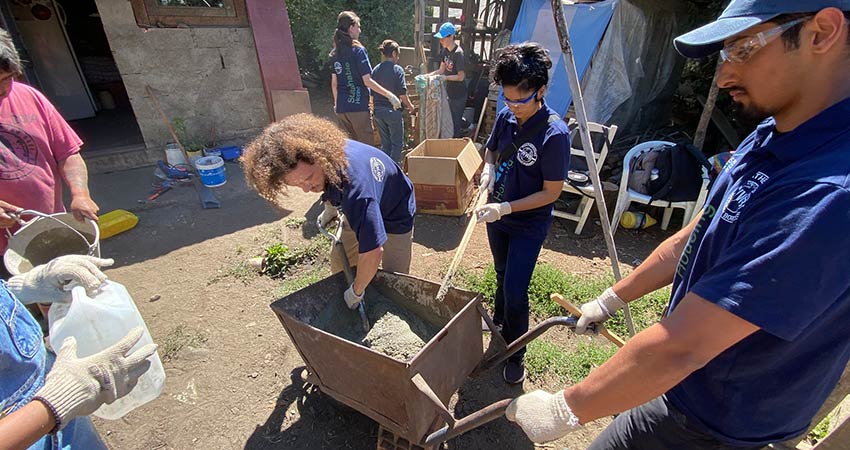
Collaborating with local partners to integrate building science, social diagnostics, and hands-on fieldwork in informal settlements.
Cultural context and problem
Urban inequality in Argentina is sharply reflected in housing conditions. While formal areas benefit from infrastructure and services, informal settlements often lack of them and families fall under housing poverty, energy poverty, etc.
This project engaged with local weatherization programs to offer social and technical experiential and interdisciplinary learning through housing audits and retrofit practices.
Theory of change
If housing conditions in informal settlements are assessed through an integrated approach that combines social sciences and building science, then targeted weatherization interventions can be designed based on real, measurable needs.
By using building science to establish a baseline-measuring variables related to health, energy performance, safety, and indoor comfort, housing improvements become evidence-based rather than anecdotal.
When these diagnostics are embedded within community-based weatherization programs, they not only improve living conditions but also generate actionable knowledge that can be monitored over time and inform broader housing strategies, treating homes as complex systems where social dynamics and technical performance are inseparable.
What we did / Our approach
Training and preparation in Buenos Aires
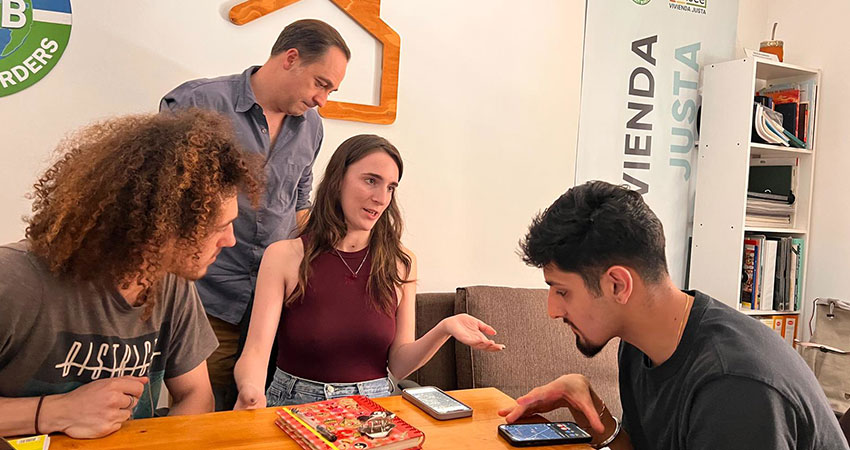
The January 2026 fieldwork began in Buenos Aires with a series of training sessions and preparatory meetings held at FOVISEE’s offices, focused on sustainable home improvement and home weatherization. Students were introduced to building science diagnostic tools and measurement techniques used to assess homes performance, emphasizing an integrated approach that combines building science with social diagnostics.
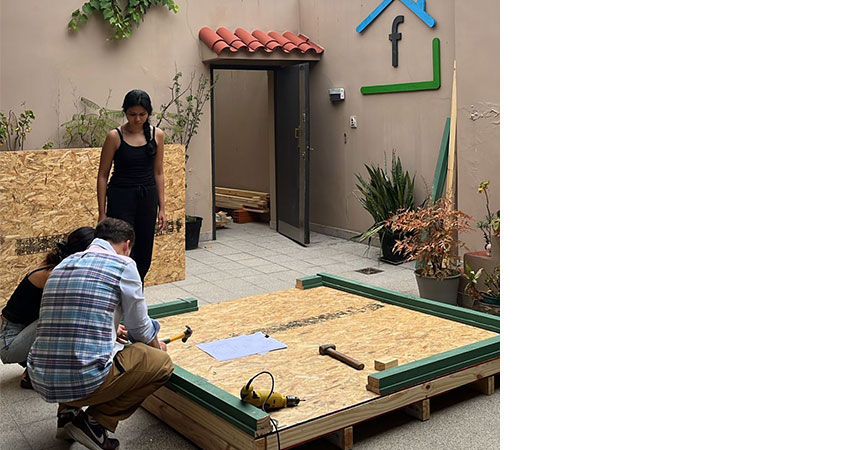
As part of this preparation phase, students worked hands-on with building a full-scale 1:1 house model, using it as a pedagogical tool to explore construction systems, insulation strategies, and housing components in real scale. The model allowed students to physically engage with materials, test assembly sequences, and better understand how technical decisions translate into built form.
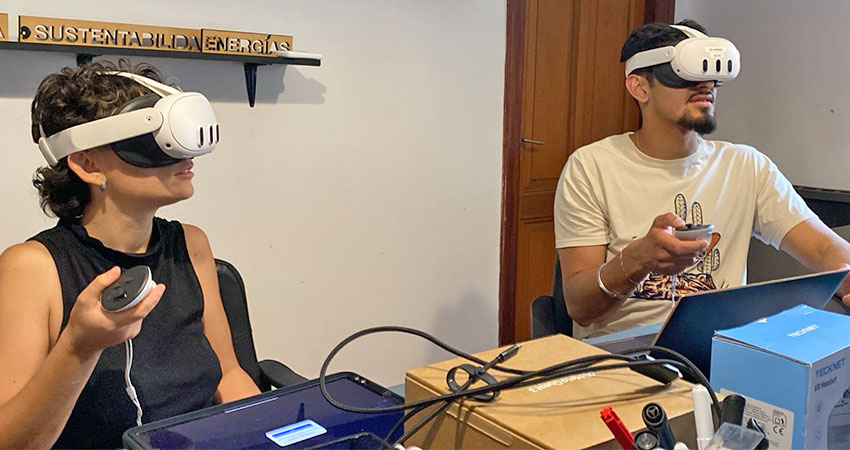
In parallel, the team explored the use of virtual reality (VR) as a complementary tool for housing diagnostics and improvement strategies. Through VR simulations and testing, students examined how digital environments can support spatial understanding, pre-intervention analysis, and the communication of housing improvements, while reinforcing the importance of on-site engagement.
Building on this technical and conceptual preparation, the team visited the Centro de Información de Vivienda Sustentable (CIVIS) in Mercedes, a public and free technical-social support space developed by FOVISEE in collaboration with the local government. CIVIS functions as a reference hub for housing information, training, and socio-architectural assessment, grounded in the science of housing and sustainability principles. Its interactive and demonstrative spaces allowed students to visualize energy flows, heat transfer, condensation processes, and air infiltration before entering the field.
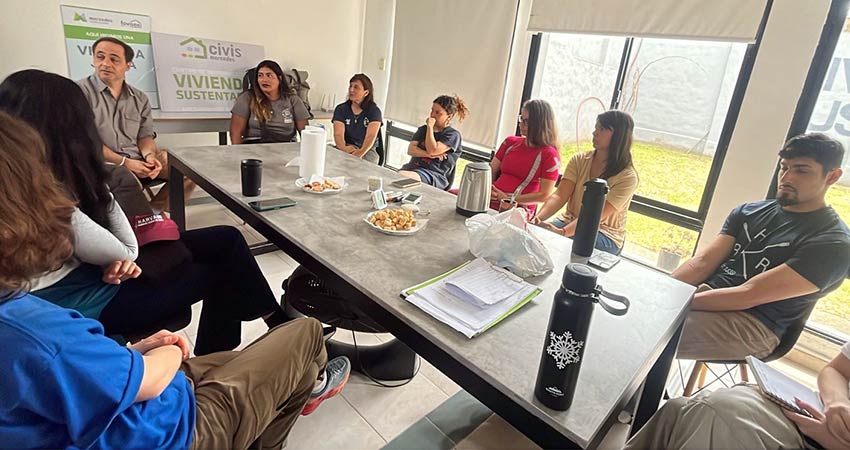
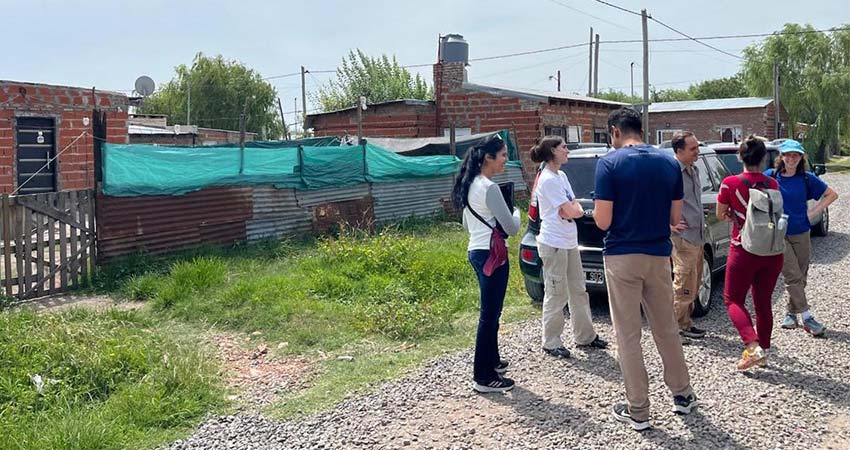
Finally, the team conducted initial housing assessments in Mercedes, Buenos Aires Province. These early site visits allowed the students to apply building science and diagnostic tools in real settings and begin translating measured data into housing improvement strategies, helping establish a shared methodological framework before the intensive fieldwork phase in Patagonia.
Fieldwork and housing intervention in Bariloche
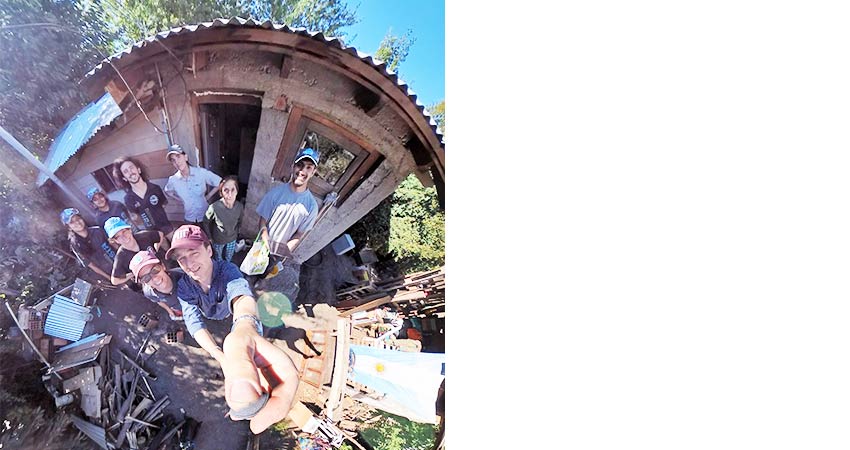
The second phase of the fieldwork took place in Bariloche, in northern Patagonia, where the team engaged in intensive on-site work in collaboration with local organizations. A central component of this phase was the comprehensive housing improvement process carried out at Clementina’s house. Students conducted an in-depth diagnostic assessment, identifying challenges related to insulation, moisture, ventilation, and indoor comfort, and translated these findings into a targeted weatherization intervention.
The implementation of the improvements was carried out collaboratively with Fundación Gente Nueva, ensuring that technical decisions were grounded in local context and community-based practice. Through this process, students experienced the full cycle of sustainable housing improvement, from diagnosis and design to execution.
Reflection and interdisciplinary learning
Throughout the fieldwork, the program incorporated structured spaces for collective reflection, including regular “afternoon talks”. These sessions created opportunities for students to share observations, discuss technical and social challenges, and reflect on the ethical dimensions of working in people’s homes. Together, the combination of training, field diagnostics, direct intervention, and reflection shaped an interdisciplinary learning experience that connected building science, community engagement, and sustainable weatherization practice.
Fieldwork highlights and key learnings
Throughout the fieldwork, students reflected on the experience of working inside real homes and how this challenged some of the assumptions formed through remote tools and classroom learning. Being physically present in the homes revealed dimensions that could not be fully captured through virtual representations or technical models alone. As Amy noted, “the polycam scan was useful in understanding the overall layout of the house and conveying the general structure,” while at the same time recognizing its limitations, explaining that “the quality and detail of the scan was still far from ideal and so the wide angle pictures should be used alongside it.”
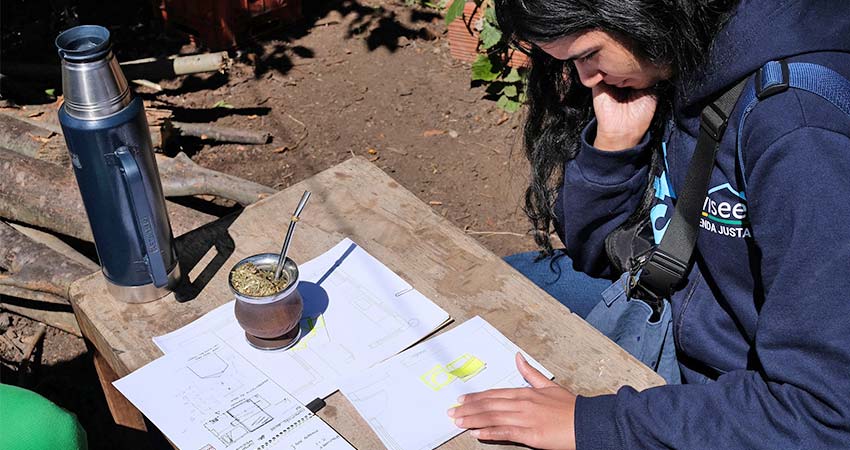
Students also highlighted that understanding how people live in and use their homes was central to making sense of technical data. Working onsite required close engagement with residents and attention to everyday practices, while documentation and images became critical once the team returned to the workspace. Reflecting on this balance, Spurty wrote, “when onsite we needed to work with Clementina and ask her many questions, some of them in regards to her belongings and how she currently uses the spaces in each room,” and added that “when we are back at the office, it is useful to see high quality images of the items and clothes in the bathroom, or the out of use room.”
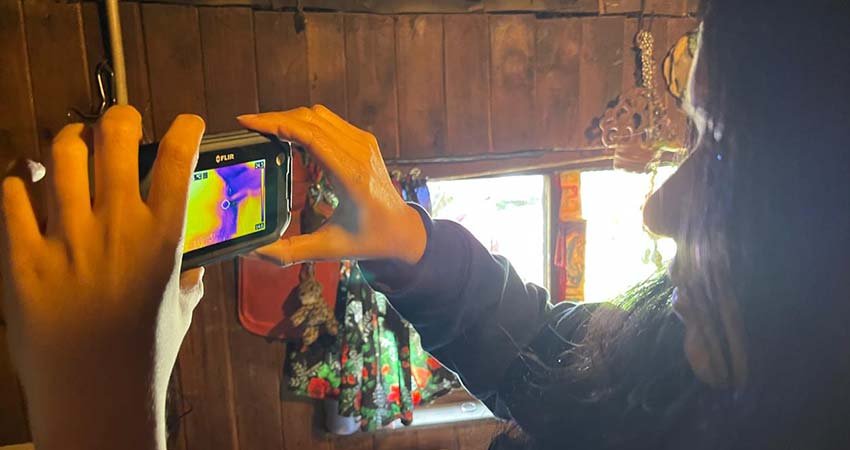
A key learning across the fieldwork was the role of data in shaping decision-making. Students emphasized that collecting detailed information was not an abstract exercise, but a necessary step to prioritize interventions and guide design choices. As Arjun reflected, “this level of data is crucial not only for deciding which challenges need to be addressed the most, but also for informing how they will be addressed.” This insight reinforced the importance of grounding housing improvements in measured evidence rather than assumptions.
Finally, students reflected on how technical observations translated directly into concrete design and intervention decisions. Seemingly small details identified through diagnostics had practical implications for the weatherization work. As Arya observed, “being able to look back at the difference in the height of the old and new roof allowed us to design an initial shape for the stove vent in its new location.” These moments illustrated how field-based learning enabled students to connect data, spatial understanding, and real-world solutions.
Case Study: Improving Clementina’s Home
Clementina and her husband Mario have lived in their home for decades under conditions marked by urgent and unsolved health, safety, quality of life and energy issues. We found structural deterioration, air leaks, poor thermal performance, lack of running water, bath, spaces differentiation, etc. Prior to the intervention, the house presented significant heat losses through the roof, walls, and connections between construction phases, directly affecting indoor thermal comfort, energy waste, and daily living conditions.
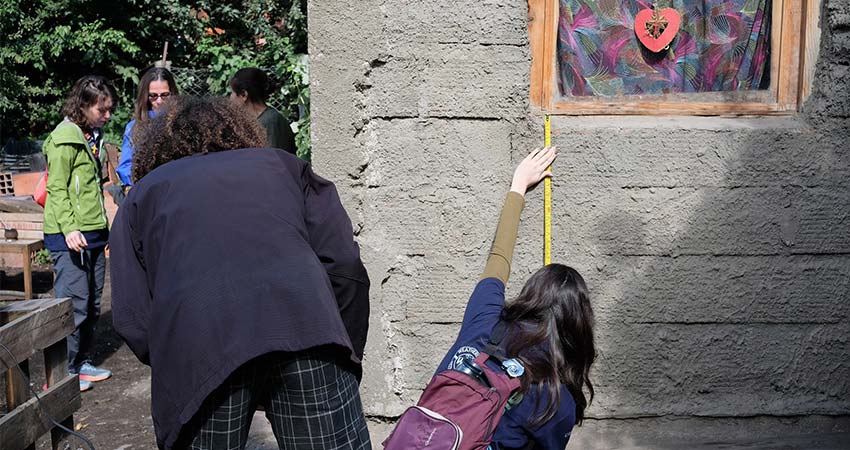
As part of the fieldwork, the team conducted a comprehensive housing diagnosis using blower door testing and on-site assessments to establish a baseline of the home’s energy performance. Based on this diagnostic process, targeted weatherization interventions were implemented, including improved roof insulation, sealing of air leaks, reinforcement of exterior walls, and material upgrades to reduce air infiltration and energy losses.
The blower door test:
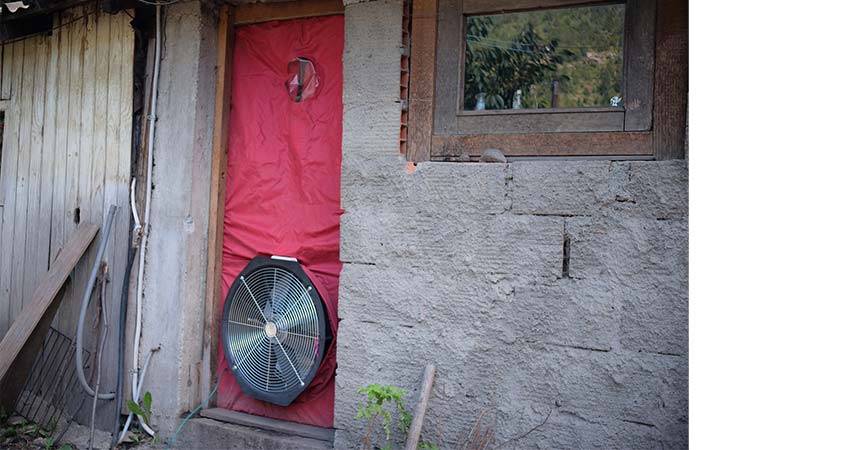
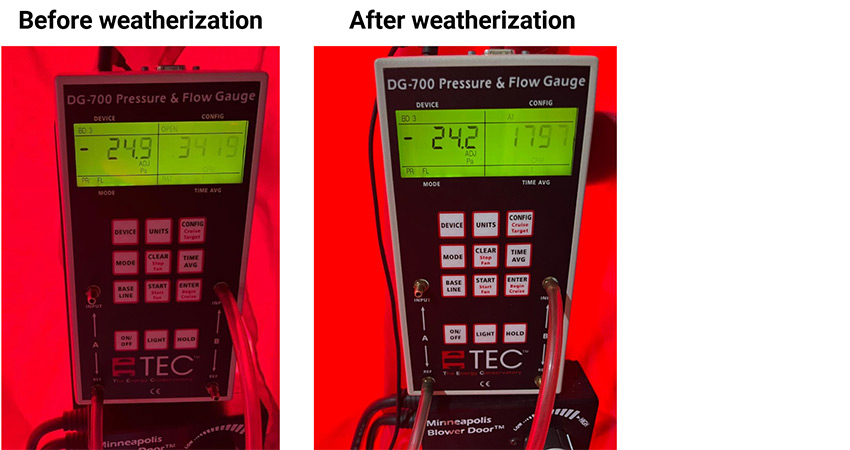
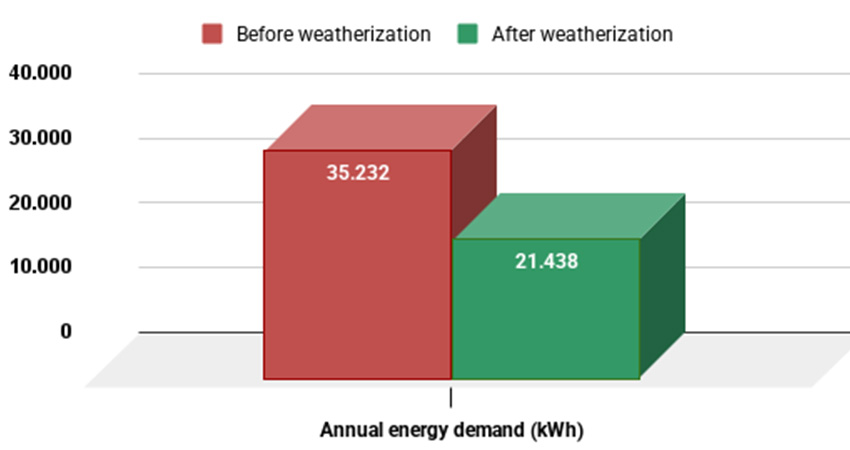
Post-weatherization measurements show a reduction of approximately 50% in air leakage, confirming a substantial improvement in the home’s energy efficiency. This, together with the thermal insulation that was added, translated into a marked decrease in the annual energy demand, as well as more stable indoor temperatures and improved thermal comfort.
As shown in Figure 2, Clementina’s home now consumes 60% less energy than before the intervention:
Beyond technical performance, these improvements had a direct impact on Clementina and Mario’s quality of life. The upgraded housing conditions reduced exposure to cold, increased safety and usability of living spaces, and supported healthier daily routines. This case illustrates how evidence-based housing weatherization -combining measurement, design, and hands-on construction- can generate meaningful improvements in both energy efficiency and lived experience.
Next steps
Building on the January 2026 fieldwork, FOVISEE and Weatherizers Without Borders are preparing to continue this collaboration in the upcoming academic semester with a new group of MIT students. Together with local partners, we are planning a follow-up fieldwork experience scheduled for June 2026, designed to deepen learning, strengthen partnerships, and further integrate housing weatherization, building science, and community-based practice.
This next phase will build on lessons learned from previous fieldwork, refining tools, methods, and training approaches while continuing to strengthen long-term collaboration between MIT and FOVISEE / Weatherizers Without Borders in support of sustainable housing improvement initiatives in Argentina.
Team
- Amy Rogin - MIT D-Lab student
- Spurty Kamath - MIT D-Lab student
- Arjun Kang - MIT D-Lab student
- Arya Sasne - MIT D-Lab Teaching Assistant
- Violeta García Bellemmi - UNSAM student
- Lautaro Ugalde Cano - UNSAM student
- Myriana Teneva - FOVISEE
- Mentor: Nicolás Maggio - President and CEO of FOVISEE and Weatherizers Without Borders - MIT SPURS Fellow and MIT D-Lab mentor & invited Lecturer
Community partners
- Weatherizers Without Borders: WWB are dedicated to fighting energy inefficiency and energy poverty, starting in Buenos Aires and now expanding to other regions in South America.
- FOVISEE Foundation: A nonprofit foundation focused on improving fair housing and rights associated with health, safety, quality of life, economic inclusion, work and environmental care.
- Gente Nueva Foundation: An organization dedicated to supporting youth and community development in low-income areas of Bariloche, Argentina. It manages ten community-based public schools that operate as educational spaces during school hours and as community centers afterward, complemented by programs focused on land rights, health, employment, entrepreneurship, microcredit, and support for families with young children.
- Escuela de Hábitat y Sostenibilidad - Universidad Nacional de San Martín (UNSAM): Established in 2021 through the integration of the Institutes of Architecture and Urbanism, Environmental Engineering Research, and Transportation Research. The School aims to respond to the complex challenges of urban and productive development in the territory where the University is located.
More information
MIT D-Lab class Applications of Energy in Global Development
Contact
Joshua Maldonado, MIT D-Lab Instructor