

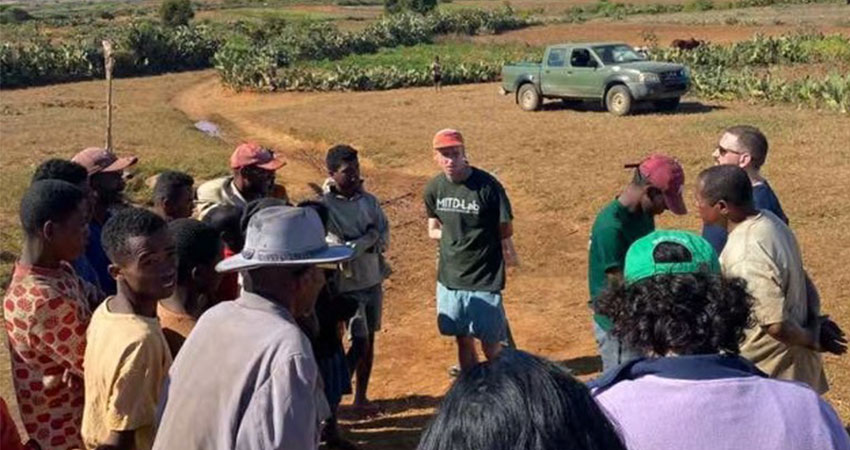
Southern Madagascar features several distinct weather patterns; among these are multiyear droughts in the Grand South and tropical cyclones in the southeast. Situated in the midst of extreme droughts and severe water scarcity, the residents of the town of Ambovombe in the Androy Region of southern Madagascar have long been afflicted by hunger and malnutrition.
Under such condition, the inadequate non-profit aid practices in recent years coupled with the increasingly unpredictable weather brought on by climate change have all being rubbing salt in the wound of local smallholder farmers, who produce nearly more than half of the food supply in the region. On the other hand, Fort Dauphin, a port city on the southeast coast of Madagascar just less than two hours of driving from Ambovombe, enjoys a vastly different climate condition with higher annual rainfall and humidity due to its advantageous coastal position, yet still faces water scarcity due to the short, intermittent nature of precipitation. The distinctive climate conditions among the two regions created by geographical differences calls for different solutions in regard to hunger.
Partnering with Tatirano, a local non-profit based in Fort-Dauphin that has been working on rainwater harvesting to provide affordable drinking water to local residents for years and has recently started a new project on Hygiene, the D-Lab team, under the guidance of Professor Libby McDonald and trip leaders Harry and Jamie, set out an information-gathering trip to collect primary source data on and map the local realities as well as challenges as regards to agriculture in the city of Fort-Dauphin and Ambovombe, in preparation for designing and prototyping substantive, participatory, and information-based solutions in the future.
Project goal
As the first group in the initiation of this multi-year project, the main objective of our team is to collect relevant data on the grounds for informative purposes of building and designing adequate solutions in the years to come. For a solution is hardly successful without considering the capacities and opinions of the local community. To accomplish this goal and better understand the local dynamics at play within the agriculture supply chain, the MIT D-Lab team spent the semester working on and refining interview questions targeted at different stakeholders within Madagascar’s smallholder farming industry, including head farmers, farmers, household women, market vendors, and intermediary sellers. The goal of the project was to build an informative report as a foundational base for future reference and discussion of solution architecture.
Students and group leaders meeting before conducting field Interviews. Clockwise: Warren Knowles, Manampialisoa Manampy, Amy Ji, Jessica Cui, Yvette Cabrera, Jamie VanTassell, Anna Mkrtchyan.
Reflections and learning
One of the most valuable lessons from our experience in Madagascar was that effective development extends well beyond the solution itself. During conversations with farmers in southern Madagascar, we repeatedly heard about agricultural interventions that had been introduced with the intention of addressing food insecurity but ultimately failed to account for local conditions and needs. For example, some communities had been encouraged to use fertilizers without sufficient consideration of their existing farming resources, or understanding of the nuances of using the products, such as the amount of fertilizers to apply to their crops. Although these interventions were technically intended to improve agricultural productivity, they were not always designed with the people expected to use them. These conversations reinforced for our team the importance of developing solutions alongside communities and understanding the broader systems in which they operate. Speaking directly with farmers also showed us that challenges such as hunger and climate change cannot be addressed through technical solutions alone; they are deeply connected to land rights, government institutions, and the laws and policies that determine who can access and use resources.
Looking forward
Our time in Madagascar was only the beginning of a longer process. As the first team working on this project, our role was not to arrive with a finished solution, but to build a stronger foundation for the teams that will follow. Moving forward, future D-Lab teams can build on this initial research by continuing to engage farmers and other local stakeholders, testing potential interventions, and refining them through community feedback.
Helping with pulling cassava on the farm while doing interviews.
Team Members
Jessica Cui – MIT D-Lab Student
Amy Ji – MIT D-Lab Student
Warren Knowles – MIT D-Lab Student
Anna Mkrtchyan – MIT D-Lab Student
Libby McDonald – MIT D-Lab Instructor
Yvette Cabrera – Journalist, MIT Knight Science Journalism Fellow
Jamie VanTassell – MIT D-Lab Trip Leader
Harry Chaplin – CEO, Tatirano
Manampialisoa Manampy – Research Assistant at Tatirano
Voarintsoa Tafita – Research Assistant at Tatirano