

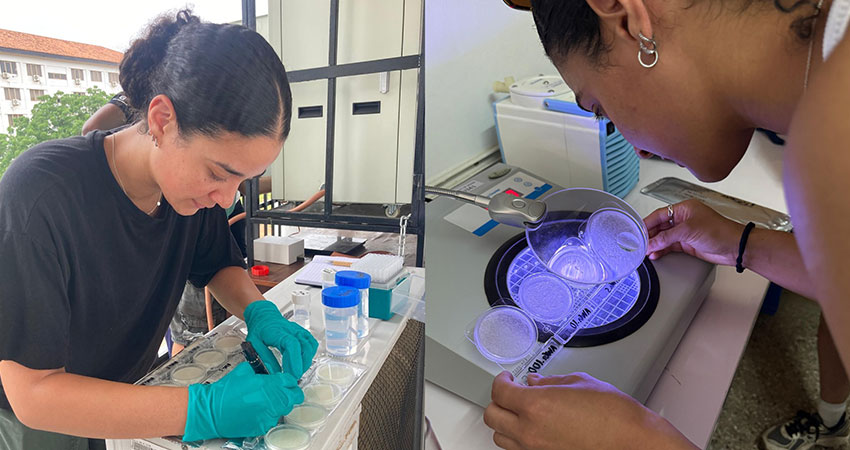
My name is Alisa Webb, and I’m currently a graduate student in the Department of Aeronautics and Astronautics. Through the D-Lab: WASH class, I joined a project coined AC Hacking, where my team collaborated with researchers at TU Delft, including PhD candidate Cynthia Acquaye, Professor Doris van Halem, and Professor Rolf Hut. This summer, I had the opportunity to explore the fieldwork required to evaluate innovative water sources.
Ensuring access to clean water through atmospheric water harvesting in Ghana
Ensuring access to clean water and sanitation for all is one of the United Nations Sustainable Development Goals (SDG 6). Among its many objectives are improving water-use efficiency across sectors and addressing water scarcity, particularly in regions experiencing limited access to safe water. One emerging technology that can contribute to these goals is atmospheric water harvesting (AWH), which captures water vapor from the air and converts it into liquid water, where it may undergo further treatment for human consumption. Existing AWH technologies include fog collectors, desiccants, polymer hydrogels, metal-organic frameworks, vapor compression cycle generators, and thermoelectric cooling systems. These technologies are especially effective in humid environments, such as tropical and coastal regions, where atmospheric water levels are highest.
This project builds upon ongoing PhD research by Cynthia Acquaye, with the broader goal of evaluating the feasibility of producing clean drinking water from AWH devices. Because air conditioning (AC) units naturally generate condensate during operation, they provide an untapped form of water harvesting, particularly in humid urban environments such as Accra, Ghana. During the previous spring semester, I explored the feasibility of using AC units across Ghana as a water source with my research teammates Gabby Bashizi and Erez Fass. Our work focused on estimating condensate production, evaluating electricity consumption, assessing the availability of air conditioning infrastructure, and examining local water accessibility. In addition, we modified an AC unit to compare theoretical condensate production models with actual water generation under operating conditions based in Cambridge.
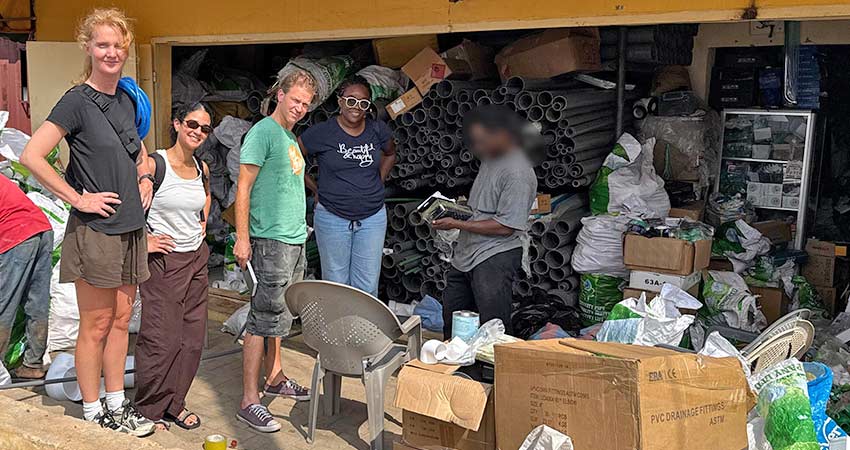
Our goal
My 10-day field visit took place in Accra, Ghana, the country's capital and largest city. Accra's high temperatures and high humidity make it an ideal location for investigating AWH technologies. My primary task was to evaluate the quality of water produced by several AWH devices, with a strong emphasis on condensate collected from AC units.
I collected water samples from multiple locations representing different environmental settings throughout the city, such as libraries or near medical clinics. The samples underwent a range of water quality analyses to evaluate both their microbiological and chemical characteristics. Testing included measurements of dissolved oxygen, chloride concentration, turbidity, and other characterizations via photometry. Additionally, I prepared samples on dehydrated culture media to detect total coliforms and E. coli, both of which are major indicators of microbial contamination in drinking water. These analyses provided valuable insight into how surrounding environmental conditions and operational factors influence the quality of water produced by AWH systems.
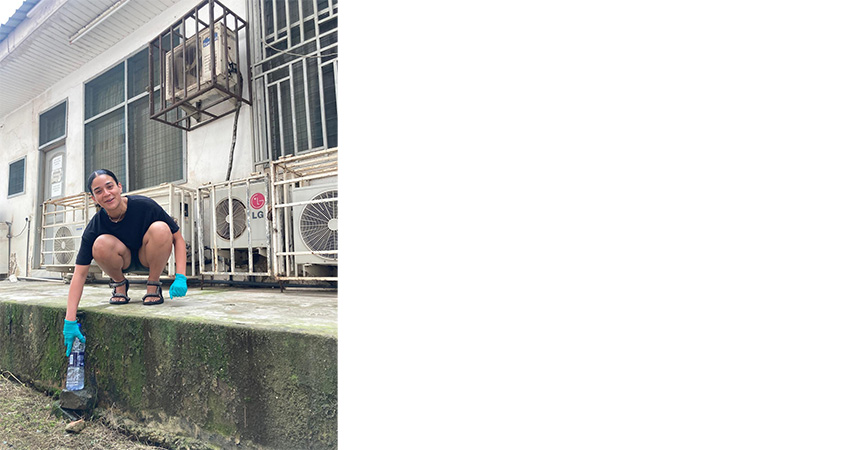
in Accra, Ghana. Photo: Courtesy MIT D-Lab
Reflections and learnings from D-Lab: WASH & fieldwork
The water quality testing demonstrated that water collected from many of the AWH devices contained mostly low and/or acceptable concentrations of the constituents, suggesting that condensate from AC units has the potential to be an alternative water source, especially with additional treatment. At the same time, this experience highlighted that water quality can vary substantially depending on the surrounding environment and the condition of the AC unit. Not unexpectedly, units located near industrial areas or regions with heavier pollution generally produced water with characteristics different from those installed near office buildings or libraries.
This experience reinforced the importance of conducting field validation alongside laboratory research. While theoretical models can estimate the quantity of water produced, evaluating water quality under real-world operating conditions is essential for determining whether AWH technology can provide a reliable source of clean water. Working directly in Ghana also provided helpful context for understanding environmental conditions that could not be fully represented through modeling alone.
Overall, this work demonstrates the potential of utilizing AC condensate as an untapped water resource, particularly in humid urban environments where AC systems are widespread. Continued research on water quality, treatment methods, and long-term system performance could help transform atmospheric water harvesting into a sustainable solution for improving water security in regions facing increasing water scarcity.
Team
Alisa Webb - MIT D-Lab Student
Gabby Bashizi - MIT D-Lab Student
Erez Fass - MIT D-Lab Student
Libby Hsu - MIT D-Lab Instructor
Cynthia Acquaye - Student at TU Delft
Professor Doris van Halem - Professor at TU Delft
Professor Rolf Hut - Professor at TU Delft
Delft University of Technology (TU Delft)
University of Ghana
More information
MIT D-Lab class: D-Lab: WASH
Contact
Libby Hsu, MIT D-Lab Lecturer and Associate Director of Academics